
Last updated September 20, 2026
Free on-site gate assessment - hinges, posts, and your LiftMaster or Nice gate operator checked before anything is quoted
The assessment is free and the quote is the invoice.

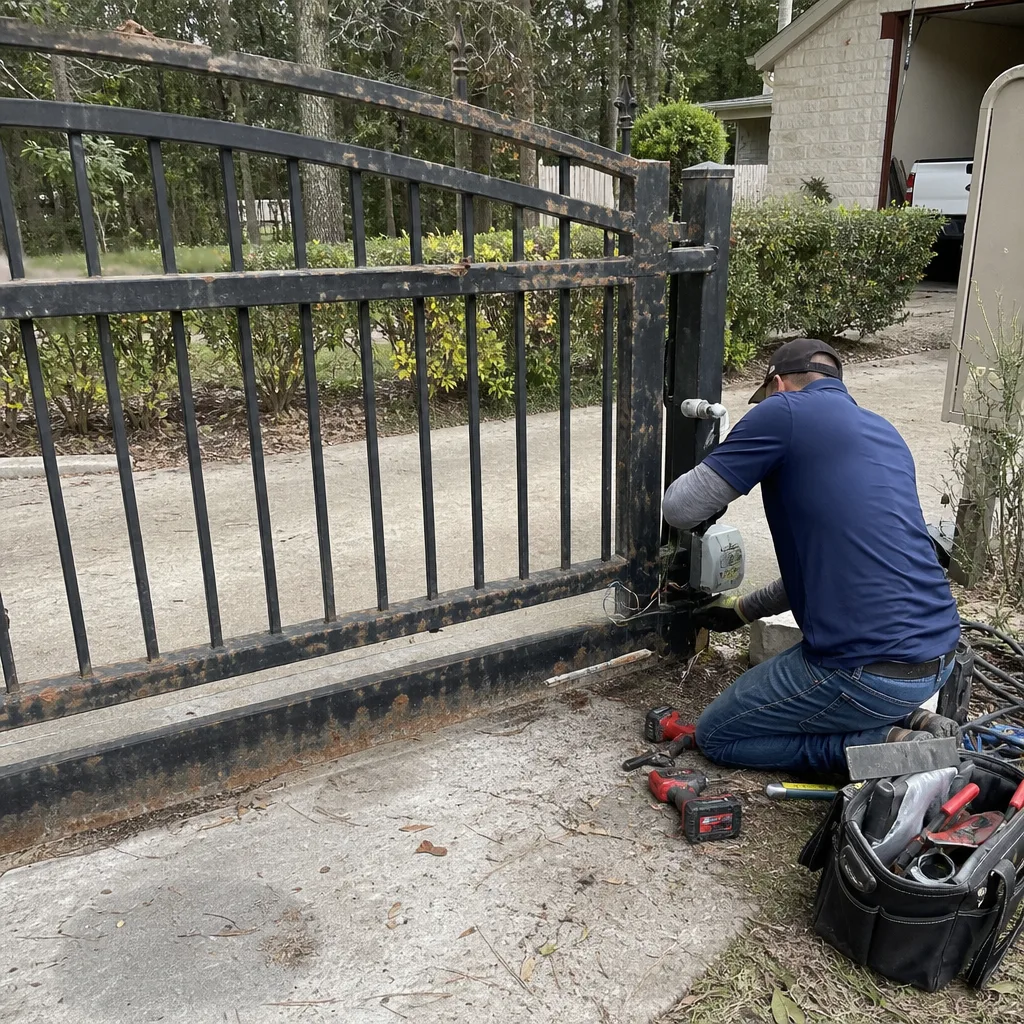 Before
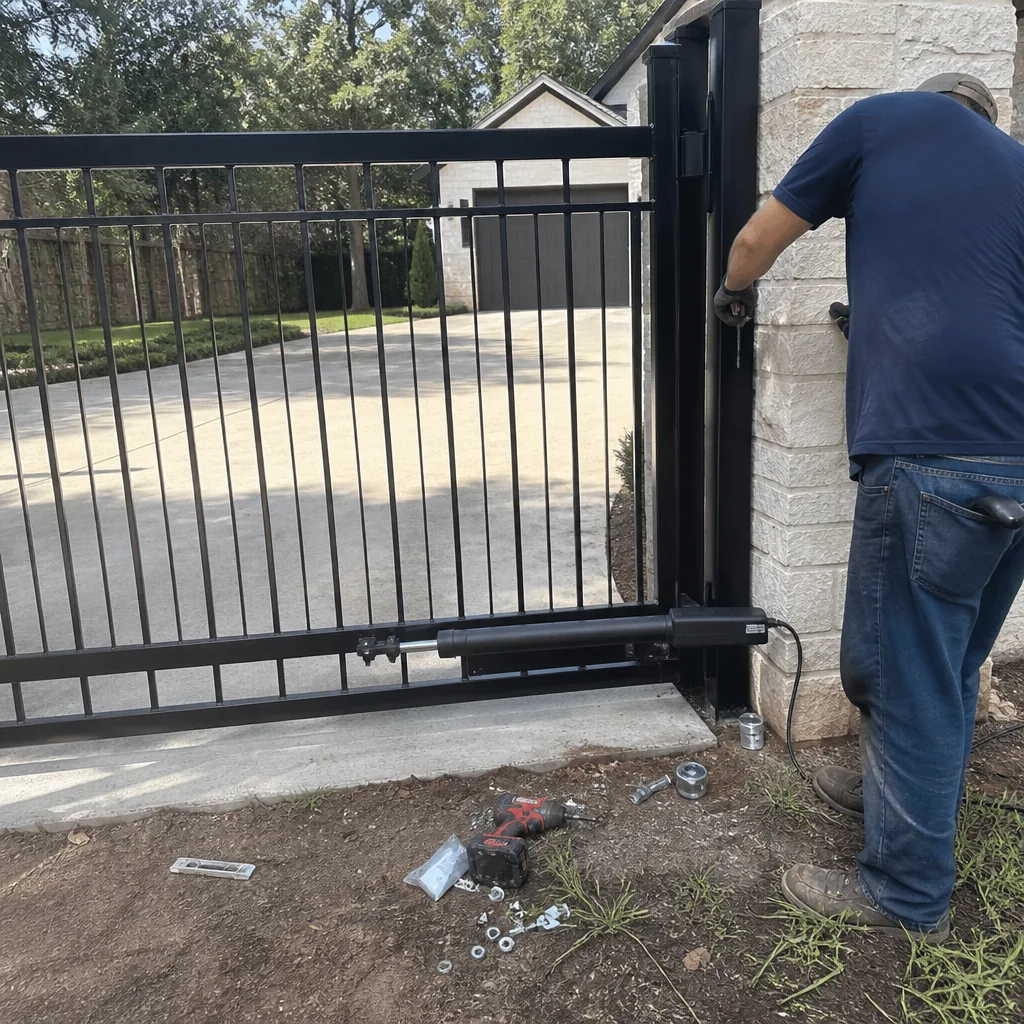 After
After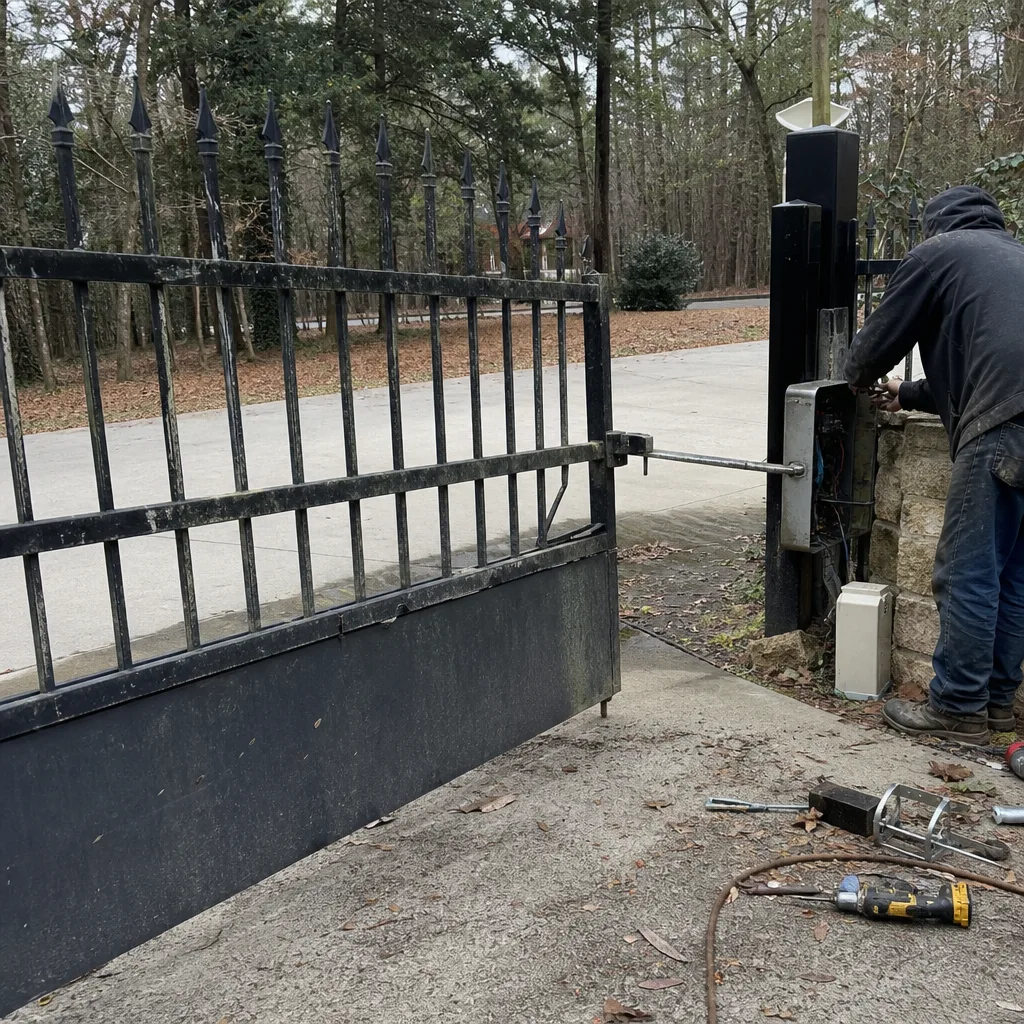 Before
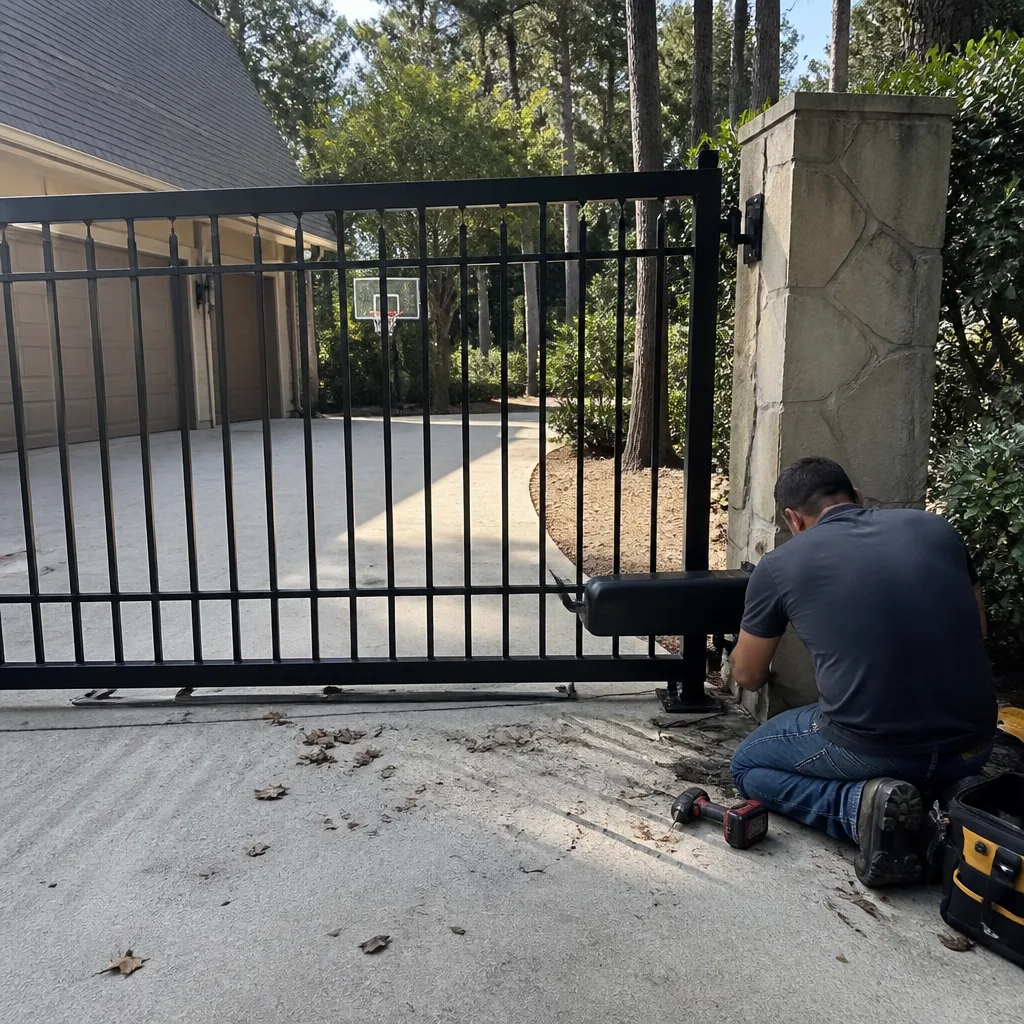 After
After Before
 After
AfterSeasonal Gate Repair Care for Conroe: Year-Round Homeowner’s Guide
Here’s the counterintuitive fact about owning a gate in Conroe: the freeze-thaw cycle that cracks concrete and heaves gates in Dallas or Amarillo barely touches us. What actually damages gates here is something most maintenance guides written for a national audience never address. A Conroe gate lives through summer afternoons where aluminum frames hit 140°F in direct sun, then a January cold snap drops ambient temperature 45 degrees in twelve hours. The motor was calibrated in one thermal condition and expected to perform in another. That mismatch, not old age, is what triggers most false faults, limit errors, and premature board failures we see across Montgomery County. This guide maps the four real stress periods gates face in Conroe, and what to do in each one-similar to The Complete Guide to Gate Repair in Conroe.
Quick Answer
Seasonal gate maintenance in Conroe means scheduling four targeted inspections per year, not one annual tune-up, because each local stress period creates a distinct failure mode. Summer heat expansion demands limit-switch recalibration, hurricane season demands debris clearing and photo-eye alignment, winter’s sudden temperature drop demands battery and hinge inspection, and spring saturation demands post-base drainage checks. Most homeowners need two professional visits per year, in March and October, with monthly self-checks between.
Table of Contents
- Stress Period One: Summer Heat Expansion (June Through September)
- Stress Period Two: Hurricane Season Debris and Moisture (August Through October)
- Stress Period Three: Winter Thermal Contraction (December Through February)
- Stress Period Four: Spring Soil Saturation (March Through May)
- The Month-by-Month Conroe Gate Maintenance Calendar
- Preparing a Conroe Gate for a Named Storm Without Voiding the Warranty
- Common Mistakes to Avoid
- When to Call a Professional
- Frequently Asked Questions
BeforeAfterStress Period One: Summer Heat Expansion (June Through September)
Conroe’s summer is the hardest season on gate electronics, and it has nothing to do with rain. A black steel gate sitting in Conroe sun from noon to four o’clock will heat well past 130°F on its face. The aluminum frame expands. The gate’s overall length can grow by a quarter inch or more depending on span. The control board inside the motor housing, meanwhile, sits in an enclosed plastic or metal box that traps heat, often pushing the board’s operating temperature past its rated threshold for hours at a time.
What this means mechanically is straightforward: the gate is longer when the motor thinks it’s in a closed position. The limit switch, which tells the motor where to stop, was likely set in a different thermal environment. In our experience across Conroe neighborhoods like River Plantation and Grand Central Park, a gate calibrated on an 80°F spring morning will run three to six degrees past its closed travel point on a 98°F July afternoon. That overrun bends brackets, shears cotter pins, and over time cracks the weld at the hinge post.
Boards fail differently. Heat accelerates capacitor aging on every major brand we service, including Viking and Linear. A control board that might last nine years in a coastal climate often lasts six in Conroe’s heat, simply because the electrolytic capacitors dry out faster. The symptom is intermittent no-response: the gate works at 7 a.m., refuses to move at 3 p.m., then works again after sunset. Homeowners mistake this for a remote problem and replace batteries for weeks before the board finally quits.
Summer-specific inspection points:
- Limit-switch calibration. Run the gate to full travel at 2 p.m. on a hot day. If it overshoots the stop point, the limit needs a summer setting. We document the exact degree reading each visit so the next technician knows what was set.
- Capacitor visual check. Swollen or domed capacitor tops show up first in July and August. If the board has a sight window, check it monthly during summer.
- Photo-eye alignment. Heat moves the mounting brackets. A photo-eye that was aligned in spring can drift two inches out of alignment by August, simply because the bracket expanded. We’ve seen this repeatedly on Ghost Controls and DoorKing systems in Conroe, especially on west-facing gate pillars that get maximum afternoon sun.
- Battery health. Backup batteries degrade roughly twice as fast at sustained 95°F+ housing temperatures. If your opener has a battery backup, test it under load in August, not January.
Summer is not the season to skip professional attention. A gate motor and opener inspection in Conroe focused on heat-induced drift costs less than the bracket repair that follows an unaddressed limit overshoot.
Stress Period Two: Hurricane Season Debris and Moisture (August Through October)
Conroe sits far enough inland that most named storms arrive as tropical depressions, but the wind field is enough to drop pine needles, sweetgum balls, and oak branches directly into the gate track and photo-eye path. The moisture is the deeper issue. Six days of 90% humidity followed by an afternoon downpour creates condensation inside motor housings that were never fully sealed, and standing water at the post base that turns a dry soil condition into a saturated one in hours.
The failure mode unique to this season is track contamination. Sliding gates in Conroe, particularly on acreage properties along FM 3083 and in the Bentwater area, collect pine needles inside the V-track at a rate that surprises homeowners who’ve never dealt with a gate before. A track half full of compressed pine needles forces the motor to work against real resistance, and the first component to fail is the drive gear, not the motor. On chain-drive Viking and DoorKing operators, a stripped drive gear from a debris-clogged track is one of the most common repair calls we handle from September through November.
Photo-eyes suffer their own seasonal problem. Wet debris won’t just block the beam; it can bend the photo-eye bracket when a heavy branch falls or when the wind whips a limb across the sensor. The gate then refuses to close, which the homeowner reads as a motor failure. The actual repair is a bracket realignment and a beam-path clearing.
Hurricane season inspection checklist:
- Clear the full track length by hand. Don’t rely on the gate itself to push debris out; that’s what strips gears.
- Run the gate while watching the photo-eye. If the beam is blocked by anything wet or leafy, the gate should refuse to close. If it closes through obstruction, the safety system is already compromised.
- Check the post base for pooling water. A post that sits in standing water for 72 hours will start to move, and a moving post changes the gate’s entire geometry.
- Inspect the canopy or housing seal. Any sign of moisture fogging inside the housing means condensation is already reaching electrical components.
- Test the gate’s manual release. In a storm scenario, you need to know how to disengage the motor quickly. If the release handle is rusted or seized, that’s a repair before it becomes an emergency.
Named-storm preparation deserves its own section further down this guide. The short version: a storm is coming, you have 48 hours, and the right sequence of steps prevents both wind damage and warranty voiding.
Stress Period Three: Winter Thermal Contraction (December Through February)
The abrupt cold snaps Conroe gets every winter, those two-to-four-day stretches where the temperature drops from 75°F to 30°F overnight, are the reason we tell homeowners a single annual tune-up doesn’t work for this climate. The gate that ran perfectly in August is now shorter. The frame contracted. The chain, if it’s a chain-drive system, contracted more than the frame. And the motor, calibrated for the expanded geometry of summer, now reads the closed position as an over-travel fault.
This is why a homeowner with a three-year-old gate suddenly gets a “limit error” display on the first cold morning of December. The gate isn’t broken. It’s just telling the truth: the limit switch was set too tight for contracted metal. In our experience in Conroe’s older subdivisions like Riverbrook and Whispering Pines, where gates were often installed by builders with minimal calibration, winter false-faulting is the single most common service call we run from December through February.
Thermal contraction also exposes hinge wear that summer masked. A hinge with a quarter inch of play in August gets snugger in January, but that snugness transmits into the mounting bolts. Loose hinge bolts are a February discovery, not an August one, because the seasonal movement works the hardware loose over repeated cycles. The same applies to weld seams. A weld that survived years of summer heat expansion finally cracks during a January contraction cycle, because the metal is cold and brittle, and the stress concentration lands exactly on that seam.
Winter inspection points specific to Conroe:
- Limit-switch false faults. If the gate shows a limit error only on cold mornings, that’s thermal contraction, not a motor failure. A single recalibration visit in December fixes the seasonal shift. We photograph the new limit position and hand the homeowner the degree reading on the visit record.
- Hinge bolt torque. Cold-weather metal contraction works hinge bolts loose over repeated cycles. Check every hinge bolt with a wrench, not by feel.
- Backup battery capacity. Cold reduces battery output by 20-40%, which is why a battery that passed a summer test won’t hold the gate open during a January power failure. If your gate has been cycling on partial charge for months, this is when the dead battery announces itself.
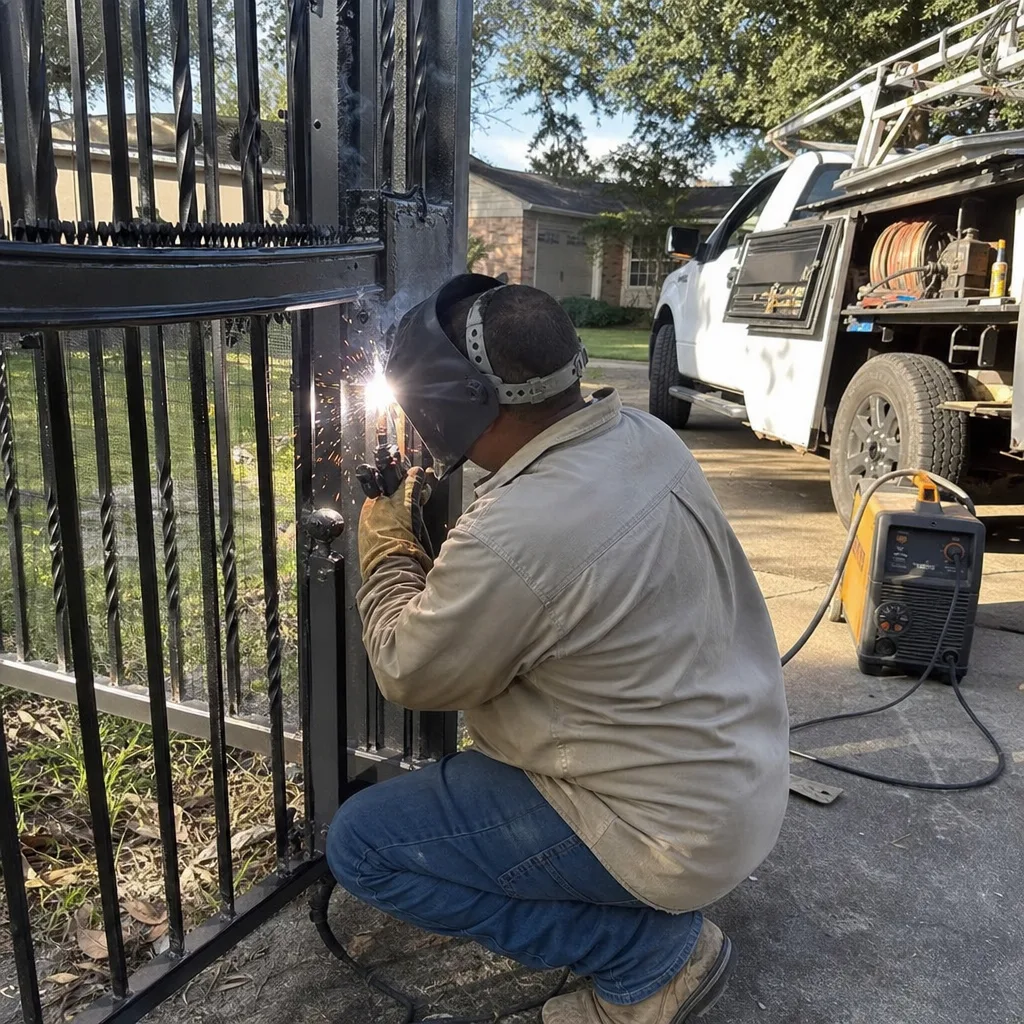
- Weld seam inspection. Look at every exposed weld on the gate and posts with a flashlight. Hairline cracks are visible in cold weather when the metal is contracted and the seam is under maximum stress.
Winter is also when the gate’s duty cycle changes. Holiday traffic through a driveway gate in Conroe increases cycle counts by a wide margin, and motors sized for daily household use get pushed into a heavier cycle. That additional wear lands on the same components the cold has already stressed.
Stress Period Four: Spring Soil Saturation (March Through May)
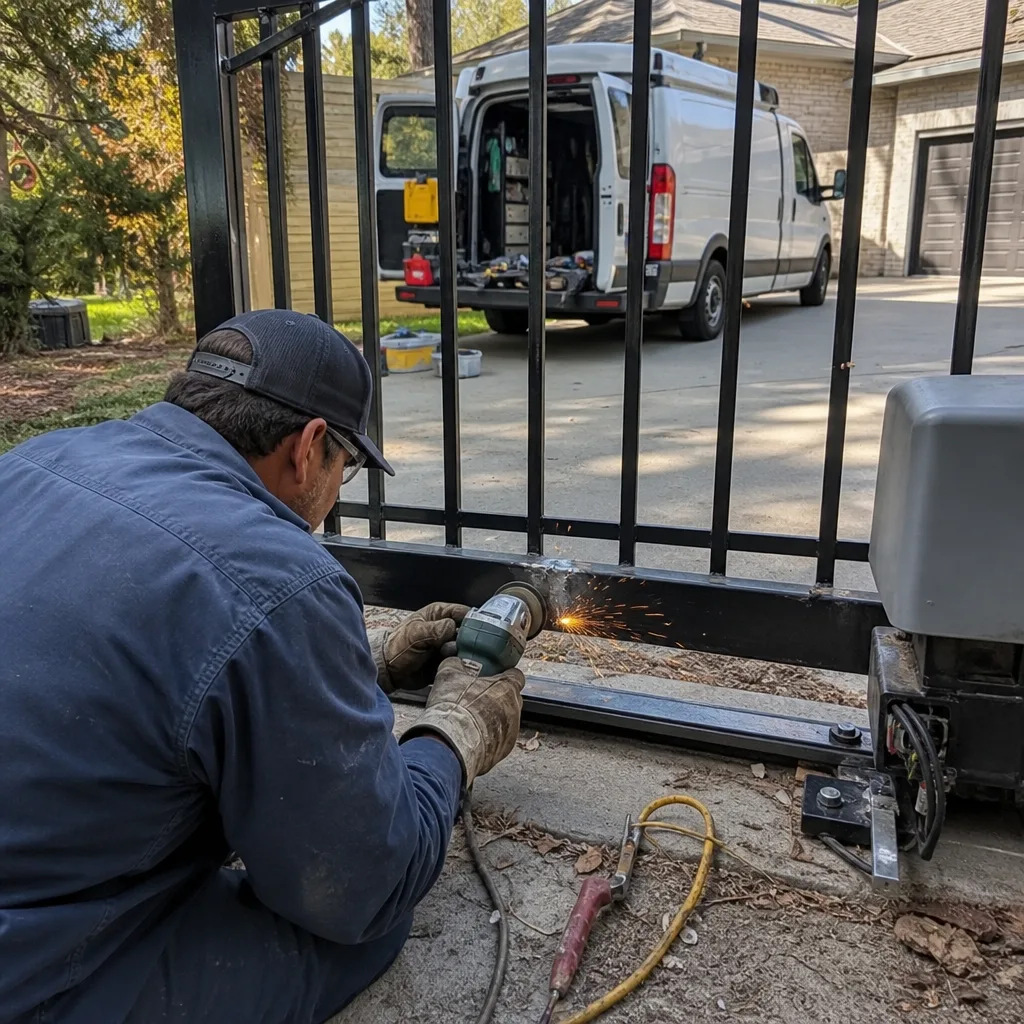
Conroe’s spring rains, especially the March and April storms that dump three inches over a single weekend, expose problems that have nothing to do with the gate itself and everything to do with what the gate is bolted to. The clay soil around Conroe retains water far longer than the sandy soil further south. A post base that stays saturated for weeks will shift, and a shifted post changes the gate’s alignment enough that the photo-eye misses the reflector, the latch no longer seats cleanly, and the operator begins working against a twisted frame.
The most common February and March discovery in Conroe is a post-base drainage problem that went unnoticed all winter because the soil was dry enough to hide it. When the soil saturates, the post moves. The gate then drags on the bottom of its arc, and the motor pulls higher current, and the thermal protection on the board starts tripping on warm afternoons. The homeowner sees a gate that stops mid-cycle for no apparent reason. The actual cause is a post base with no drainage path.
Spring is also when weeds and vine growth, especially the aggressive vines that grow along Conroe fence lines, wrap around gate hardware and photo-eye mounts. One season of unchecked vine growth will bind a gate hinge to the point where the motor strains, and the strain shows up first on the weakest electrical connection, often the wire nuts inside the junction box, which corrode faster in Conroe’s spring humidity.
Spring recovery checklist after a wet Conroe season:
- Check for gate drag. Open the gate manually from full closed to full open. If it contacts the ground at any point, the post has moved and the gate needs a geometry correction.
- Inspect post-base drainage. There should be a visible path for water to flow away from the post. If the base sits in a low spot, add gravel or a drainage channel before the next heavy rain.
- Clear vegetation. Cut vines and weeds back from hinges, photo-eyes, and the full travel path. Don’t wait until the vine wraps a hinge bolt.
- Test the manual release. Spring is the season when rusted release mechanisms freeze most often in Conroe, because the winter moisture has had months to work on unpainted steel.
- Check the junction box. Open it and look for moisture staining, green corrosion on wire nuts, or insect nests. Spring is wasp season in Conroe, and junction boxes are a favorite nesting site.
- Verify photo-eye function after the spring rains. Misalignment that developed over the wet season often only shows itself when the gate refuses to close.
For gates that sat through the whole season with no attention, a gate repair service in Conroe that includes a full geometry check is usually the least expensive course correction before a failed drive gear or twisted frame makes the repair larger.
The Month-by-Month Conroe Gate Maintenance Calendar
Every task on this calendar is tied to a specific failure it prevents. No general checklists. The goal is to know which component is under seasonal stress during any given month and do the one task that relieves that stress.
January: Limit-switch recalibration
The first real cold snap has happened or is happening. Thermal contraction is at its maximum. A limit error on a cold morning is the signal. Have the limit switch recalibrated, and the new position documented in writing.
February: Weld seam and hinge inspection
Cold metal and repeated contraction cycles expose hairline cracks that are invisible in summer. Inspect every weld seam on the gate and posts, and torque-check every hinge bolt. February is the month that prevents a gate collapse in June.
March: Post-base drainage assessment
Spring rains are starting. Walk the post bases after a heavy downpour and look for standing water. If the post is sitting in water, fix the drainage now. March is the month that prevents a shifted post in May.
April: Vegetation clearance and manual release test
Vines are growing again. Clear everything from the travel path, hinges, and photo-eye mounts. Test the manual release while the gate is still wet from spring rain. A rusted release in April is a cheap fix; a seized release in August is a bigger one.
May: Full-cycle test and photo-eye alignment
Run the gate through five full open-close cycles while watching for hesitation, binding, or error codes. The soil has had time to move. If the gate drags or the photo-eye misses, schedule a geometry correction before the heat arrives.
June: Thermal check for heat drift
First 95°F day. Run the gate at 2 p.m. and watch the closed position. Any visible overshoot past the stop point means the limit switch needs a summer calibration. Photograph anything you adjust.
July: Capacitor check and housing ventilation
Peak heat month. Open the motor housing. Look for swollen capacitors, heat discoloration on the board, or a housing that’s too hot to touch. Heat kills boards in July and August in Conroe. A ventilation or shading fix now saves a board replacement later.
August: Hurricane season prep run-through
Peak storm month. Do the full named-storm preparation sequence once as a practice run, before a storm is actually in the Gulf. You want to find the seized manual release or blocked photo-eye now, not when the storm is 36 hours out.
September: Track and debris clearance
Pine needles and leaf litter are falling. Clear the full track and check the drive gear for debris-induced wear. September track clearing prevents October gear replacement.
October: Post-storm geometry check
After any significant storm, check the gate for movement: post shift, hinge strain, photo-eye misalignment. October is the month when storm-driven damage that will become a winter failure first shows itself.
November: Battery health test
Before the first cold snap, test the backup battery under load. Cold will drop its output by 20-40%. A battery that fails a November test won’t survive a January power failure.
December: Holiday cycle preparation
Holiday traffic pushes cycle counts up. Confirm the operator is rated for the increased duty, check all safety features once, and make sure the manual release is known and accessible. December is the month to save a holiday from a gate failure.
Preparing a Conroe Gate for a Named Storm Without Voiding the Warranty
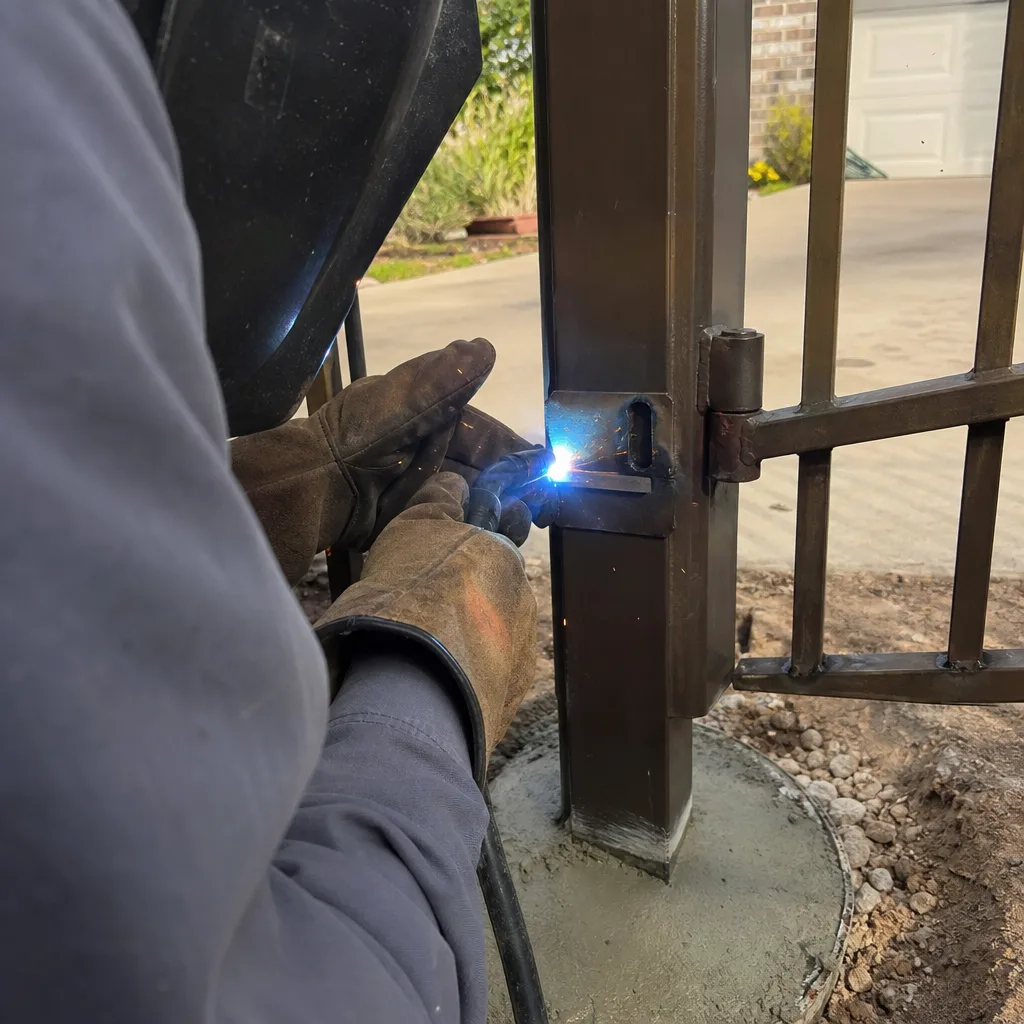
A named storm in the Gulf with a Conroe trajectory creates a specific problem: you want to secure the gate against wind damage, but physically bracing it or removing panels can void the manufacturer’s warranty. The wrong prep creates a new mechanical problem that’s worse than the wind risk. Here is the sequence we use for commercial access-control sites in Conroe and recommend for residential gates.
Step 1: Disengage the motor. Find the manual release mechanism and disengage the operator. The gate should move freely by hand. If it doesn’t, the problem isn’t the storm; it’s a pre-existing bind that the storm will make worse. A manual release that won’t disengage in good weather will be impossible in the dark during a storm.
Step 2: Secure the gate in the open or closed position, depending on your site and wind direction. A gate left hanging mid-travel catches the wind like a sail. Use a locking mechanism that does not rely on the motor. The motor’s internal brake is not designed to hold against hurricane-force gusts, and doing so is how motors get damaged even when the gate survives.
Step 3: Clear the photo-eye path and remove anything that could become airborne. The photo-eye sends a beam across the gate path. If the gate is secured and the area is clear, the beam’s presence won’t cause the gate to move, but dark storm skies can trigger a false obstruction signal if debris crosses the path. This is a nuisance, not a safety risk, but it’s worth preventing.
Step 4: Power down the control board. If the storm is expected to bring power surges or lightning, switch off the circuit breaker to the operator. Surge damage to control boards during Conroe storms is one of the most common post-storm repair calls we handle. A board that was powered down before the storm survives the surge; a board that was left live often doesn’t.
Step 5: Photograph the entire gate and operator before and after the storm. Take photos of the limit positions, the photo-eye alignment, the hinge condition, the post base, and any existing damage. This documentation is essential for warranty claims and insurance, and it’s the same documentation habit we apply as part of The Haven Standard. Under Clause 4 (Evidence on every job), every visit includes a documented photo record at no additional charge, and homeowners should apply the same logic to storm prep.
Any of the nine major automation brands we service, LiftMaster, FAAC, BFT, Linear, Viking, Ghost Controls, DoorKing, Elite, and Mighty Mule, can be prepared this way without voiding the warranty. The warranty is voided by physical bracing that bends the frame, removal of safety components, or continued operation during the storm. Powering down, disengaging, and securing is normal use.
Common Mistakes to Avoid
- Scheduling one annual tune-up in a fixed month. A gate tuned in October will be out of calibration by February because the metal contracted. Conroe’s four stress periods call for four season-specific checks, not one generic visit.
- Assuming a limit error on a cold morning means the motor is failing. In Conroe, a winter limit error is often just thermal contraction. Recalibrating the limit switch fixes the symptom without replacing anything else.
- Ignoring pine needles in the track because the gate still moves. The gate moves until the drive gear strips. Clearing the track monthly during fall costs nothing; replacing a Viking or DoorKing drive gear costs hundreds.
- Powering through the gate during a storm because the remote still works. Surge damage to control boards happens when the gate is live during the storm. Power down before the storm arrives, not during it.
- Bracing a gate with 2x4s to secure it. The brace changes the gate’s geometry and bends the frame, and the bend becomes a permanent repair issue. Disengage the motor and secure the gate with its own locking mechanism instead.
- Replacing remote batteries when the gate is intermittent in summer. An intermittent gate in hot weather is often a heat-stressed board, not a remote problem. The board fails at peak heat and works again when it cools. Battery replacement won’t fix the board.
- Assuming the post base is fine because the gate worked last year. Conroe’s clay soil moves posts over one wet spring. A gate that worked in December can drag in March because the post shifted during February rains. Drainage is the fix, not the motor.
When to Call a Professional
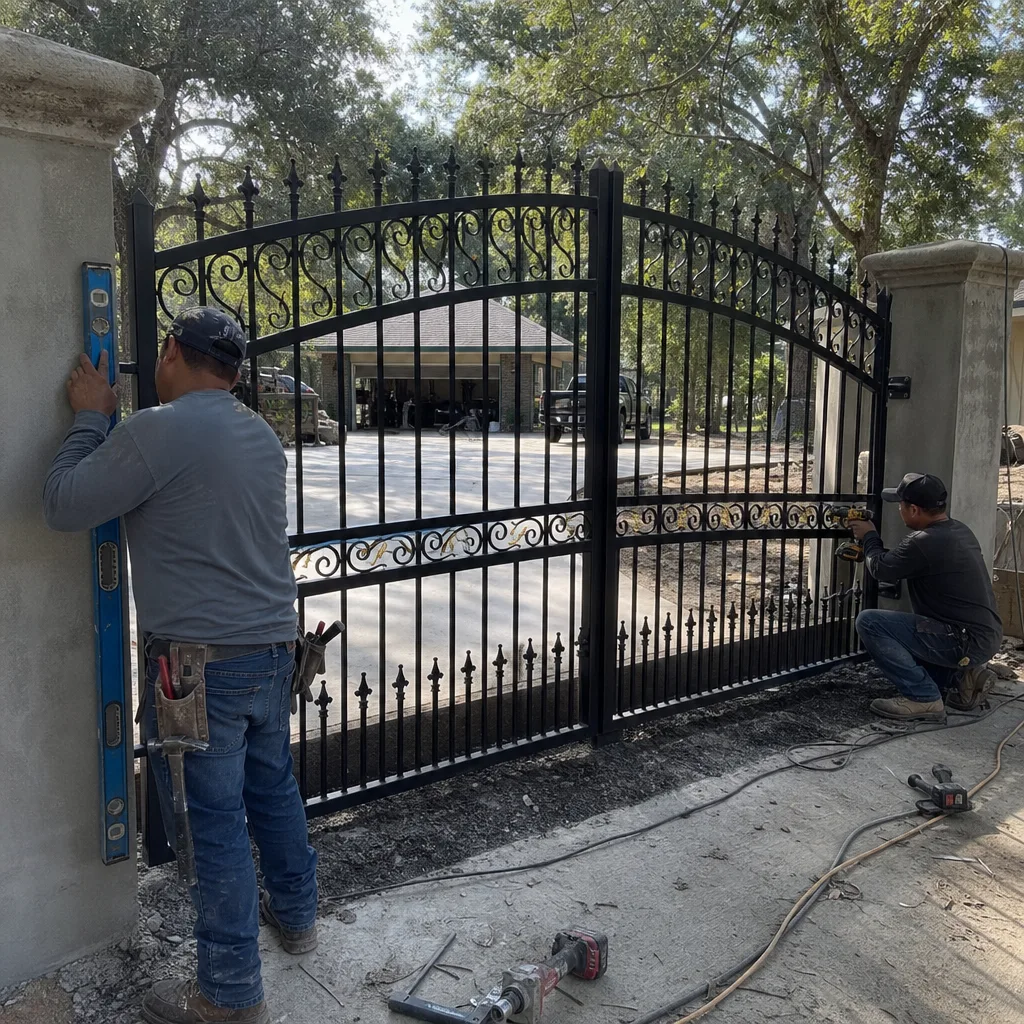
Some seasonal tasks are safely DIY: clearing the track, cutting vines, photographing the gate. Others are not. A limit-switch calibration requires knowing the correct travel degree reading, and setting it wrong damages brackets and bends pins. Weld seam inspection requires knowing what a fatigue crack looks like versus a surface scratch. Post-base drainage correction means knowing whether the gate needs shimming, re-anchoring, or full re-setting. And any electrical work inside the motor housing presents a shock hazard and should be handled by someone who works on gate electronics every week. Gate Repair from Vance Gate Repair Conroe offers free estimates in Conroe, call (936) 297-5126, and every job includes a written price before work starts and a documented photo record when the technician leaves.
Frequently Asked Questions
In Conroe, twice a year, once in March and once in October. These two visits catch the two most damaging seasonal transitions: winter-to-spring soil saturation and summer-to-hurricane-season heat stress. Between professional visits, run the monthly calendar tasks above. Call (936) 297-5126 for a written quote, estimates are free.
Because cold metal contracts, and a limit switch set for summer expansion reads the closed position as over-travel. This is the single most common winter false fault in Conroe, and it’s fixed with a limit recalibration, not a new motor. Vance Gate Repair Conroe documents the exact new limit reading on every visit.
A seasonal inspection with limit recalibration and photo-eye alignment typically runs between $95 and $185 depending on gate type and opener brand. A visit that includes board diagnostics or battery replacement lands between $185 and $340. Every quote is written before work begins, so there is never a surprise invoice at the end. Call (936) 297-5126 for an exact quote, estimates are free.
Vance Gate Repair Conroe services nine major gate-automation brands: LiftMaster, FAAC, BFT, Linear, Viking, Ghost Controls, DoorKing, Elite, and Mighty Mule. We work on whatever motor is already on the property and don’t steer homeowners toward replacement when repair is the more sensible option.
Post-storm gate failures in Conroe are usually a misaligned photo-eye, a shifted post, or a board damaged by a power surge while the gate was still live. The first step is a diagnostic visit that identifies which one happened. Every visit includes a photographed record of what we found and what we set back to correct.
Disengaging the motor, securing the gate with its own locking mechanism, and powering down the control board before the storm does not void any manufacturer warranty. Physical bracing, removing safety components, or running the gate during the storm does. Storm preparation done correctly is standard use. Call (936) 297-5126 if you want a written storm-prep checklist for your specific gate and opener.
The Bottom Line
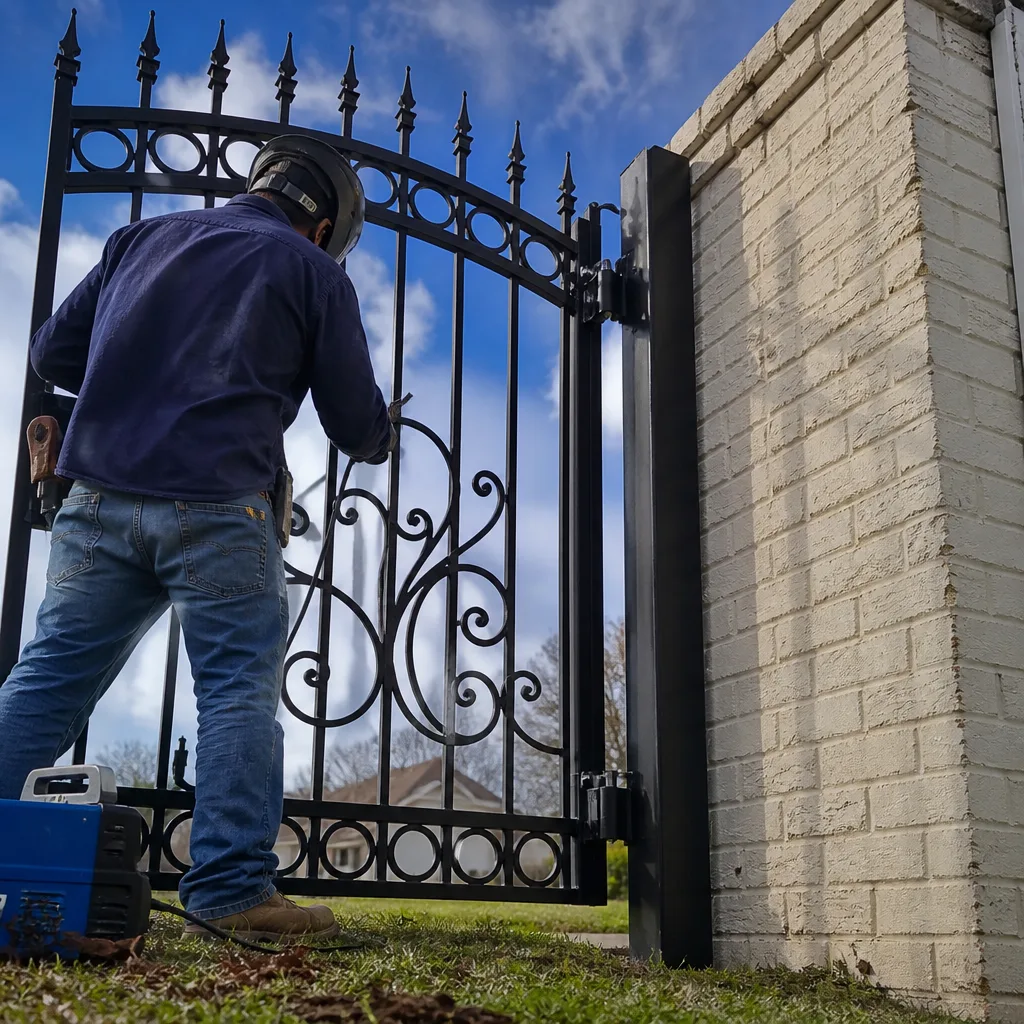
Conroe gates fail according to a local calendar, not a generic one. Summer heat expands the frame and cooks the board. Hurricane season loads the track and drowns the post base. Winter’s cold contracts everything and exposes false faults. Spring’s rain moves the posts and invites the vines. Four stress periods, four responses, and none of them are a single spring tune-up. The simplest way to stay ahead of all four is a documented inspection in March and October, with the monthly tasks between. A written price before any work starts, and a photo record after, is the standard this guide has been written to. Vance Gate Repair Conroe has applied that standard to over 22,000 gates since 2014. If you’re ready to get your gate on the Conroe calendar, gate installation and repair in Conroe starts with a free written estimate. Call (936) 297-5126 and talk to a live person, any hour, any day.
Written by Adrian Vance, Owner at Vance Gate Repair Conroe, serving Conroe since 2014.