
Last updated September 20, 2026
Free on-site gate assessment - hinges, posts, and your LiftMaster or Nice gate operator checked before anything is quoted
The assessment is free and the quote is the invoice.

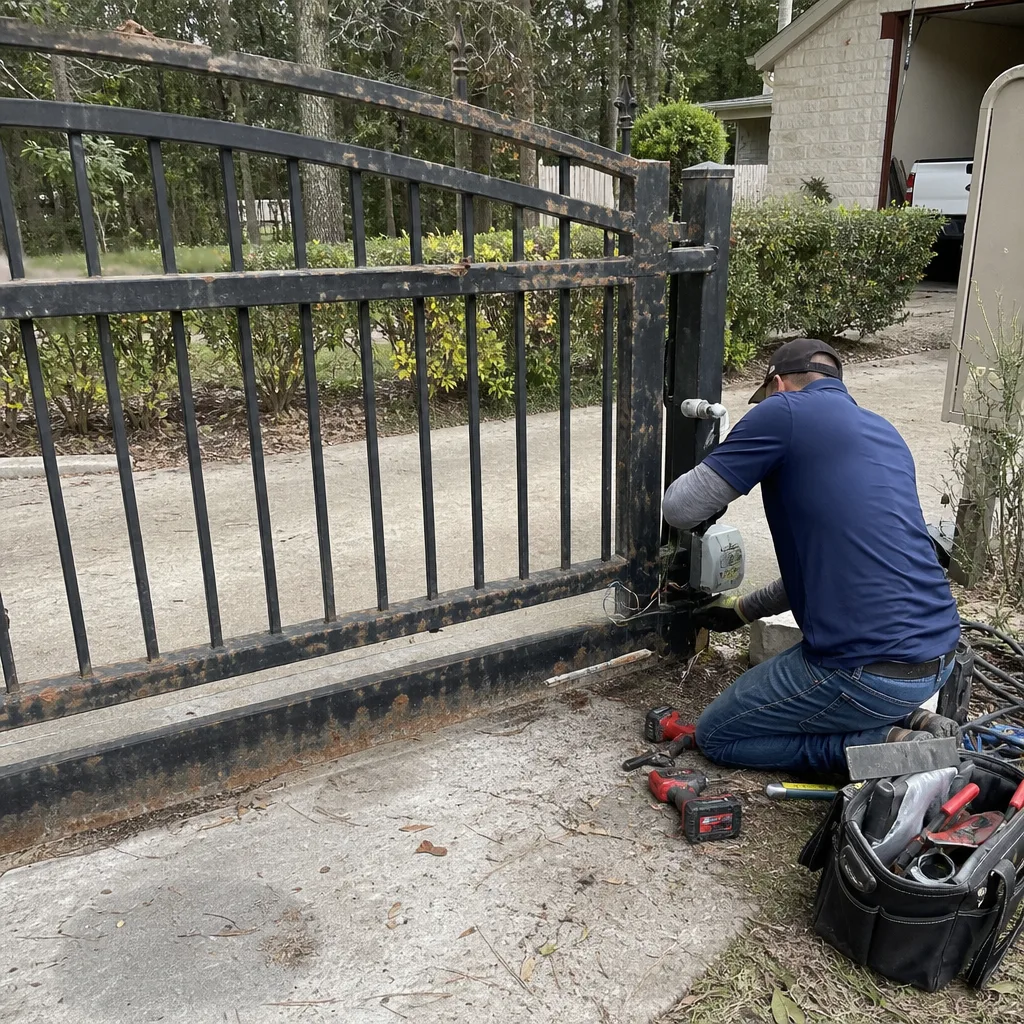 Before
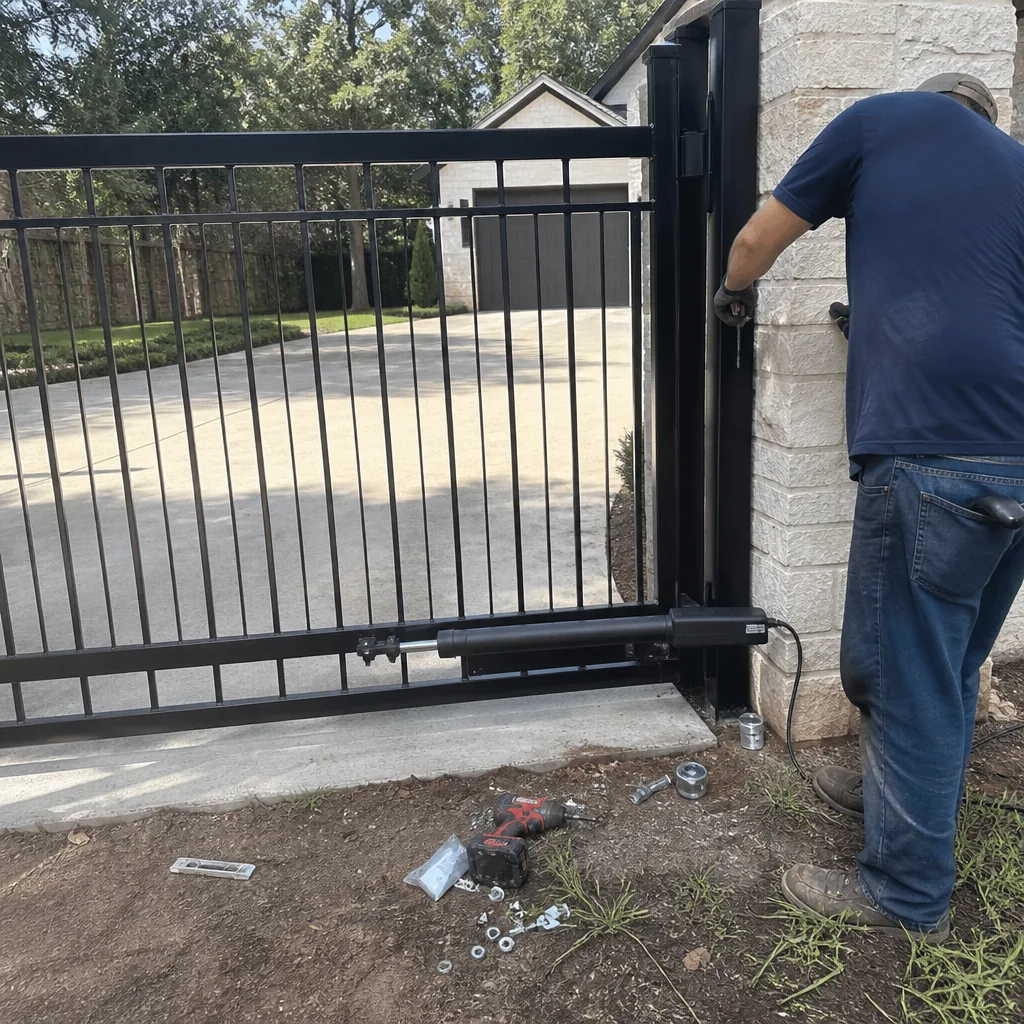 After
After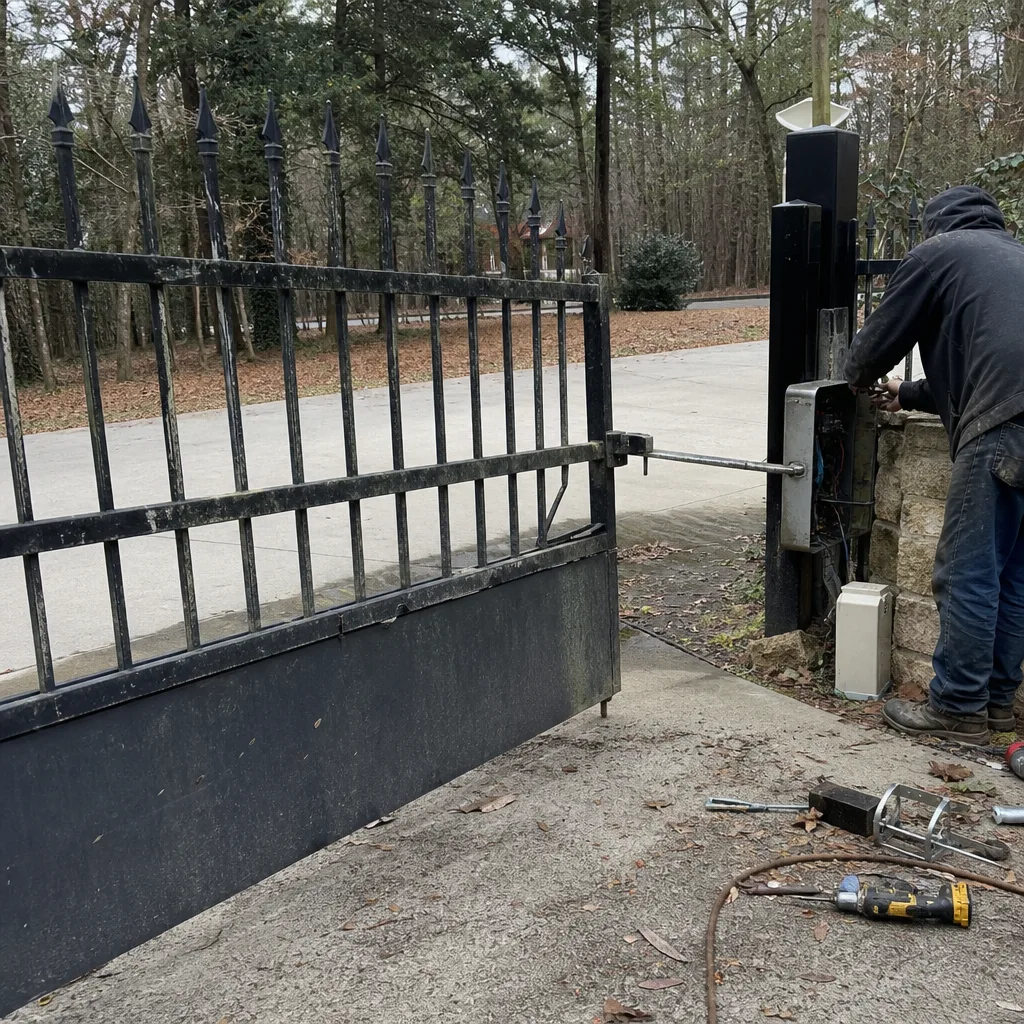 Before
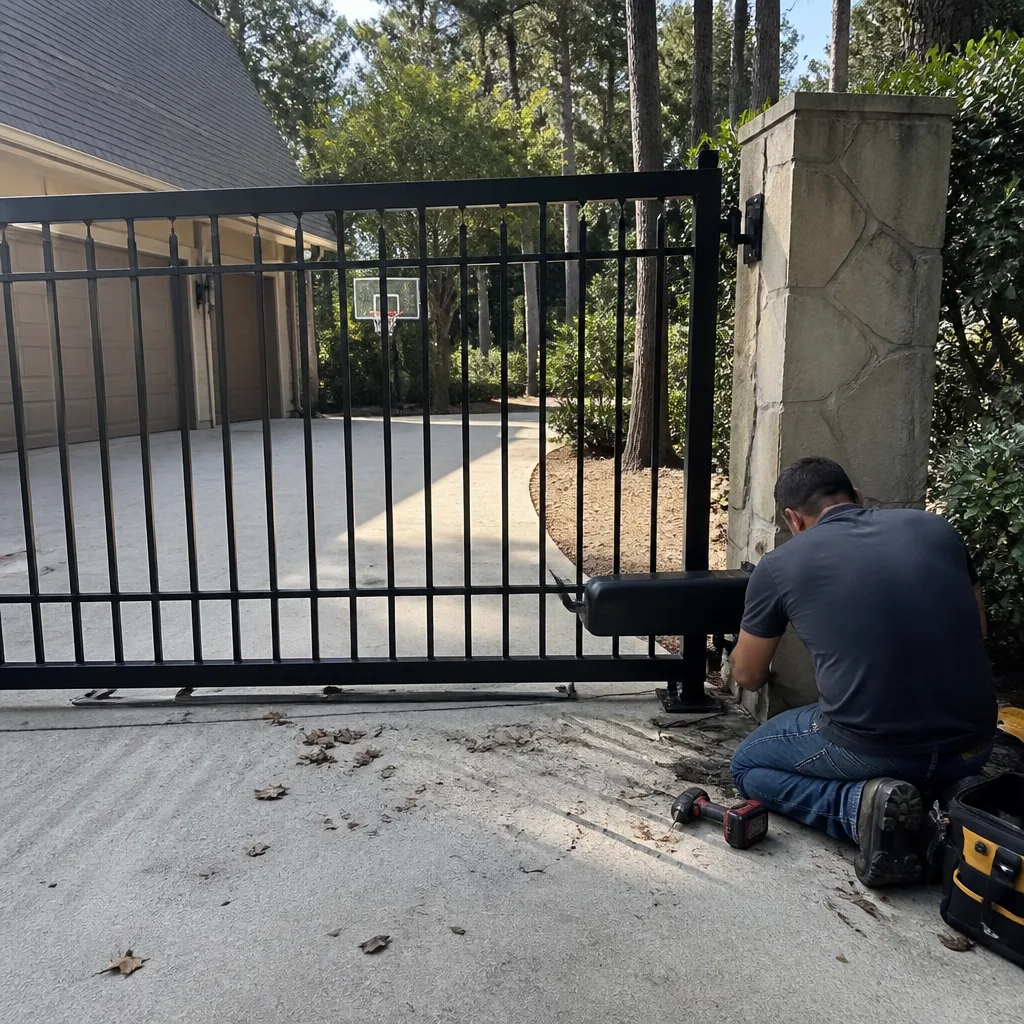 After
After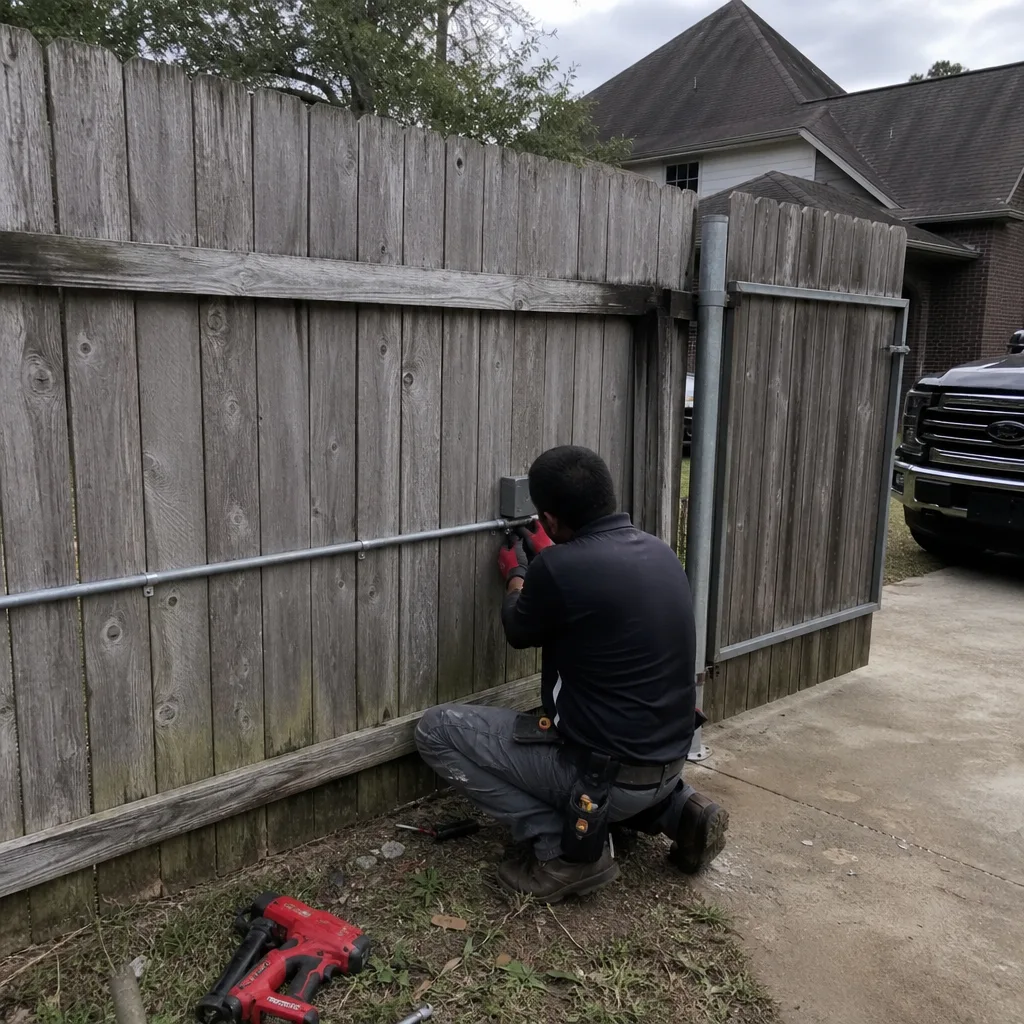 Before
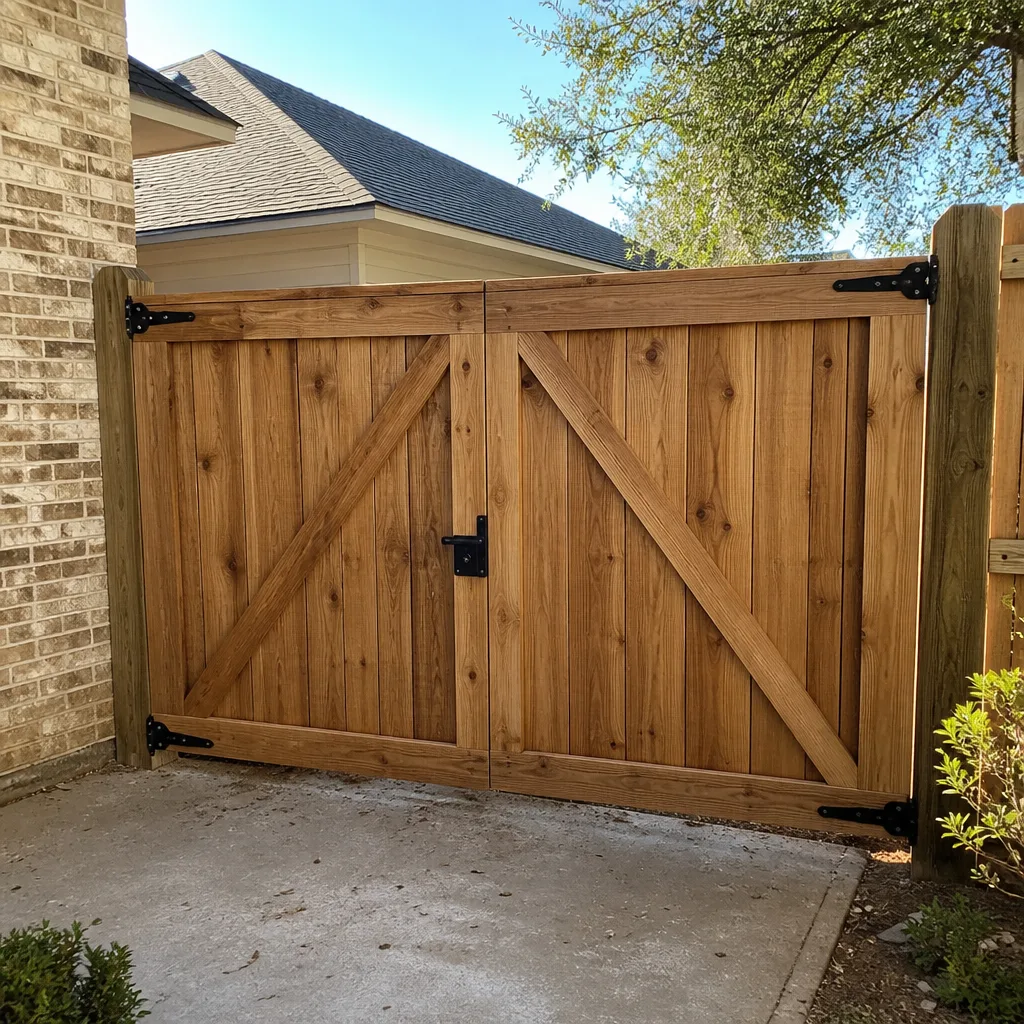 After
AfterThe Complete Guide to Gate Repair in Conroe
Montgomery County’s clay soil expands and contracts up to 4 inches seasonally. That movement range is enough to knock a post-mount gate out of plumb, strip a limit switch setting, and void a motor warranty, all from the same root cause most technicians never name on an invoice. In Conroe, where the gumbo clay under most residential lots holds water like a sponge and releases it during summer droughts, your gate is moving more than you think. This guide-along with our DIY vs Professional Gate Repair: The Conroe Homeowner’s Decision Guide-explains the three failure patterns we see most often, how to tell them apart before you spend a dollar, and what a complete repair record should actually contain.
Quick Answer
Most gate repairs in Conroe trace back to three root causes: foundation shift from expansive clay soil, humidity-accelerated corrosion at weld seams, and mis-set limit switches. A swing-gate motor replacement in Conroe typically runs between $850 and $1,400 installed, while a limit switch adjustment is often under $125 (see our Gate Repair Cost Breakdown: The Conroe Homeowner’s Reference for 2026 for full pricing). Knowing which failure you’re dealing with determines whether you need a technician for an hour or a full motor swap.
Table of Contents
- Why Conroe Soil Matters More Than the Motor
- How to Read Hinge Plates and Post Bases
- How Humidity Attacks Weld Seams and Cable Terminations
- The Limit Switch Problem Nobody Explains
- Gate Repair Cost Categories You Can Check Estimates Against
- What a Post-Repair Record Should Actually Include
- Gate Company vs. Gate Specialist: The Difference That Matters
- When to Repair and When to Replace
BeforeAfterWhy Conroe Soil Matters More Than the Motor
Conroe sits on a patchwork of Lufkin and Tishomingo soil series, both classified as expansive clay. What that means in plain terms: the dirt under your gate posts swells when it rains and shrinks when it doesn’t. A 4-inch seasonal range doesn’t sound like much until you realize your gate post is a lever. Ten feet of post with 4 inches of movement at the base translates to visible drift at the top, and every fraction of a degree of post lean changes the geometry the gate was originally hung to.
We’ve replaced motors in Conroe where the motor wasn’t the problem. The post had shifted six degrees out of plumb over three years, and the operator was fighting gravity every cycle until the gear train gave out. A new motor bolted to the same shifted post fails again, often inside 18 months. That’s the pattern to understand before calling anyone: soil movement is the root cause; the motor failure is the symptom.
Here’s how to think about diagnosis order:
- Check the post first. Use a 4-foot level against the post face. If the bubble is off by more than a quarter inch at 4 feet, the post has moved enough to affect gate geometry.
- Look at the gate leaf. With the gate closed, the top rail and bottom rail should sit parallel to the ground. If the gap between gate and post is wider at top than bottom, or vice versa, the post has rotated.
- Listen to the motor. A motor that strains at the same point in every cycle is fighting a mechanical bind, not a motor problem. The bind is usually post movement or a shifted hinge plate.
In Conroe subdivisions like River Plantation, Graystone Hills, and Teaswood, we see this failure pattern on gates installed five to eight years ago, when the original post footings were poured at 24 inches instead of the 36 to 48 inches that actually resists clay movement. The gate worked fine for years. Then it didn’t. The soil didn’t change; it finally accumulated enough movement cycles to exceed the footing’s tolerance.
The fix isn’t always a new post. Sometimes it’s re-shimming the hinge plates and resetting the operator limits. Other times it’s a steel post collar or a full post reset with a deeper footing and helical pier support. What matters is that the technician identifies the post as the root cause and writes it on the record. If the invoice just says “motor replaced” and the post is still leaning, you’ve bought a second motor for the wrong problem.
This is exactly the situation covered by our Gate Repair in Conroe process: we document what moved, by how much, and what we did about it before we touch the motor. If you’re considering a new post or a motor swap, start with the repair page and understand the scope before anyone hands you a quote.
How to Read Hinge Plates and Post Bases
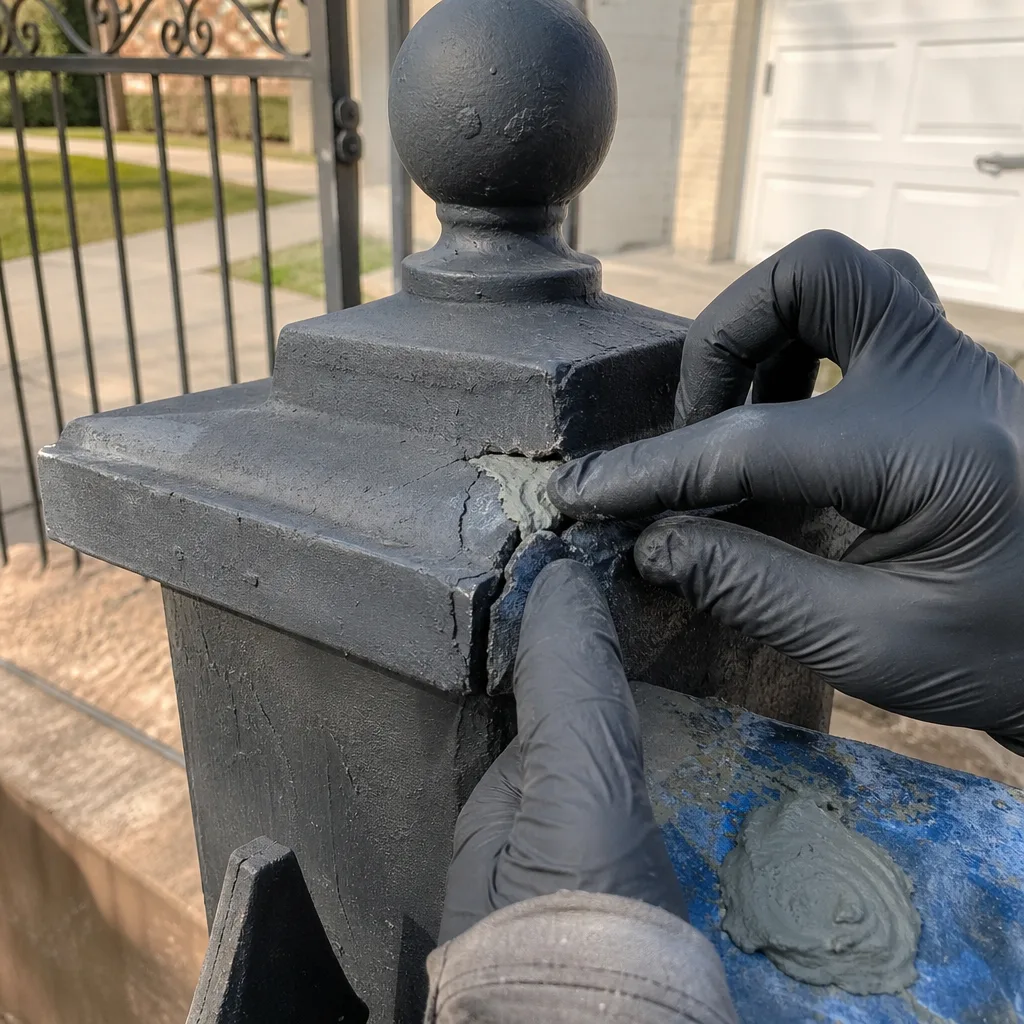
Before you call anyone, you can gather evidence. We teach our customers this because a homeowner who can describe what they’re seeing saves a diagnostic visit and gets a more accurate first quote. Here’s what to look at, in order.
Hinge plate wear patterns
Stand at the hinged side of the gate and look at the gap between the hinge plate and the post. A hinge plate on a healthy gate sits flush against the post face with consistent reveal around all four edges. On a gate experiencing soil movement, you’ll see one of these:
- Top hinge gap wider than bottom: The post is leaning away from the gate. The gate is hanging on the bottom hinge and dragging somewhere along its arc.
- Bottom hinge gap wider than top: The post is leaning toward the gate. The gate weight is being carried by the top hinge, which means the top hinge is slowly tearing the lag bolts out of the post.
- Diagonal gap (wider at one corner): The post has rotated on its axis. This is the worst case because both hinges are now misaligned in different directions, and the gate leaves its swing plane entirely.
Post base indicators
Look at the concrete collar or weld line where the post enters the ground. Fresh hairline cracks radiating outward from the post collar are the earliest sign of active movement. A rust bloom at the collar indicates water pooling against the post base, which accelerates the freeze-thaw and wet-dry cycles in Conroe’s climate. A post that has pulled up out of its concrete collar by even half an inch has already compromised the footing.
Document what you see with phone photos before calling for estimates. A photo of a hinge gap or a shifted post collar is the single most useful piece of information you can hand a technician before they arrive. It tells us whether we’re sending someone for an adjustment visit or a post-reset job, and it lets us give you a written price over the phone that actually holds.
How Humidity Attacks Weld Seams and Cable Terminations
Conroe’s average relative humidity runs between 60 and 80 percent year-round, with morning condensation on metal surfaces for most of the spring and fall. That’s a perfect environment for a specific kind of corrosion that doesn’t show up on flat plate surfaces. It concentrates at weld seams, bolt holes, and cable terminations, and here’s why.
A weld seam is never perfectly smooth. The weld metal cools at a different rate than the parent steel, leaving a microscopic crevice at the toe of the weld where moisture sits and doesn’t evaporate. Once a little rust starts there, it creates a rough surface that holds more moisture, and the cycle feeds itself. Flat steel dries in the morning; weld seams don’t. The result is a gate that looks fine on its visible faces but is losing structural integrity along every welded joint.
What to inspect first:
- Weld seams at hinge mount pads. This is the highest-stress point on any gate. Rust at the weld toe here is not cosmetic. It’s the beginning of a hinge tearing loose.
- Weld seams at the gate’s cross-brace joints. A gate’s diagonal brace carries its entire cantilever load. Rust along that seam means the gate is slowly sagging under its own weight.
- Cable terminations at the motor. Where the low-voltage or line-voltage cable enters the motor housing, any nick in the insulation invites moisture into the copper. That causes voltage drop, which causes the motor to draw more current, which causes overheating and board failure.
- Battery terminals on solar-powered openers. Conroe’s humidity corrodes battery terminals on Ghost Controls and Mighty Mule solar kits faster than inland climates. A corroded terminal reads as a dead battery on a tester, but the battery may be fine.
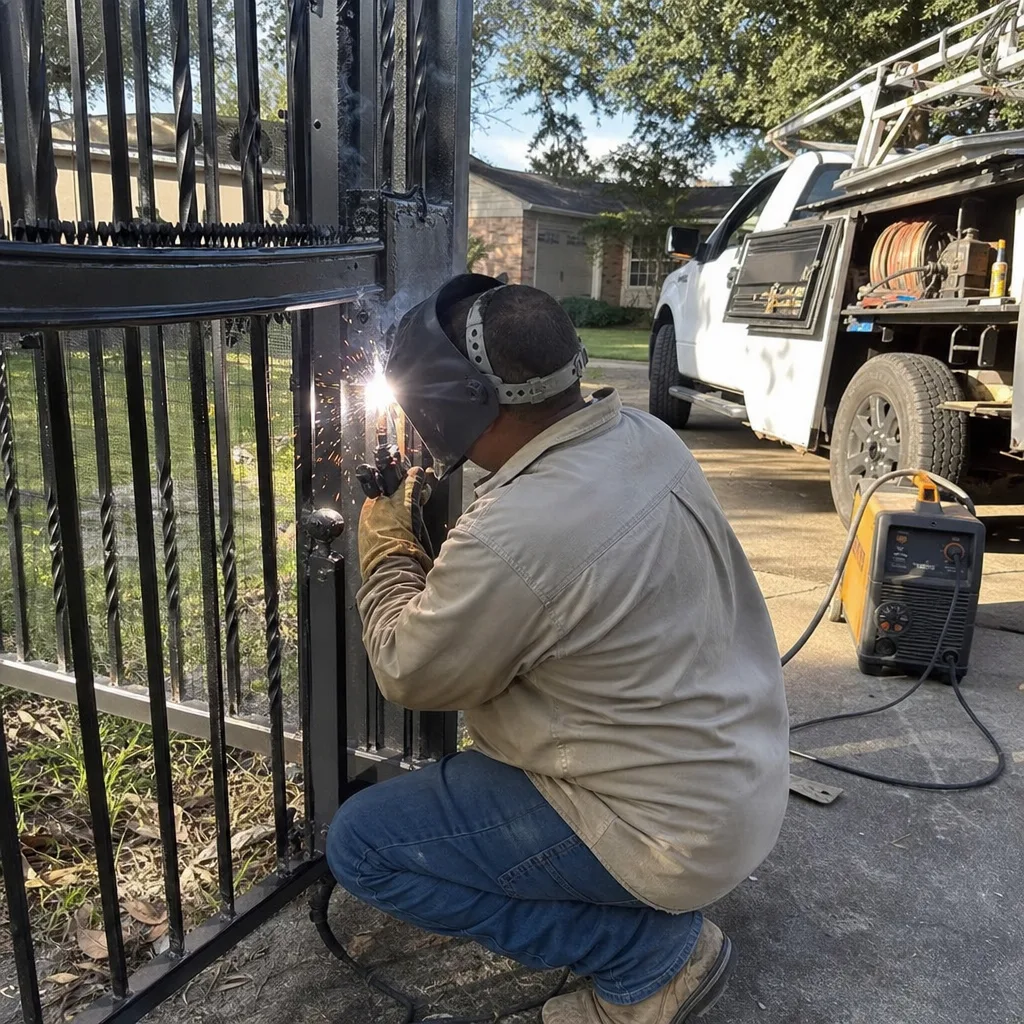
We photograph these areas on every visit because what looks like surface rust to a homeowner is often structural to a fabricator. The treatment is either wire-wheel removal and a zinc-rich primer for surface corrosion, or cut-out and re-weld for anything deeper than 25 percent of material thickness. Our rule: if a screwdriver can chip the rust and expose pitting, the joint gets rebuilt, not painted over.
The practical takeaway for Conroe homeowners is simple: inspect weld seams every spring, and treat surface rust early. A $185 rust remediation on a hinge seam beats a $900 hinge replacement and re-hang, and it definitely beats a gate tearing free and falling on a car or a person.
The Limit Switch Problem Nobody Explains
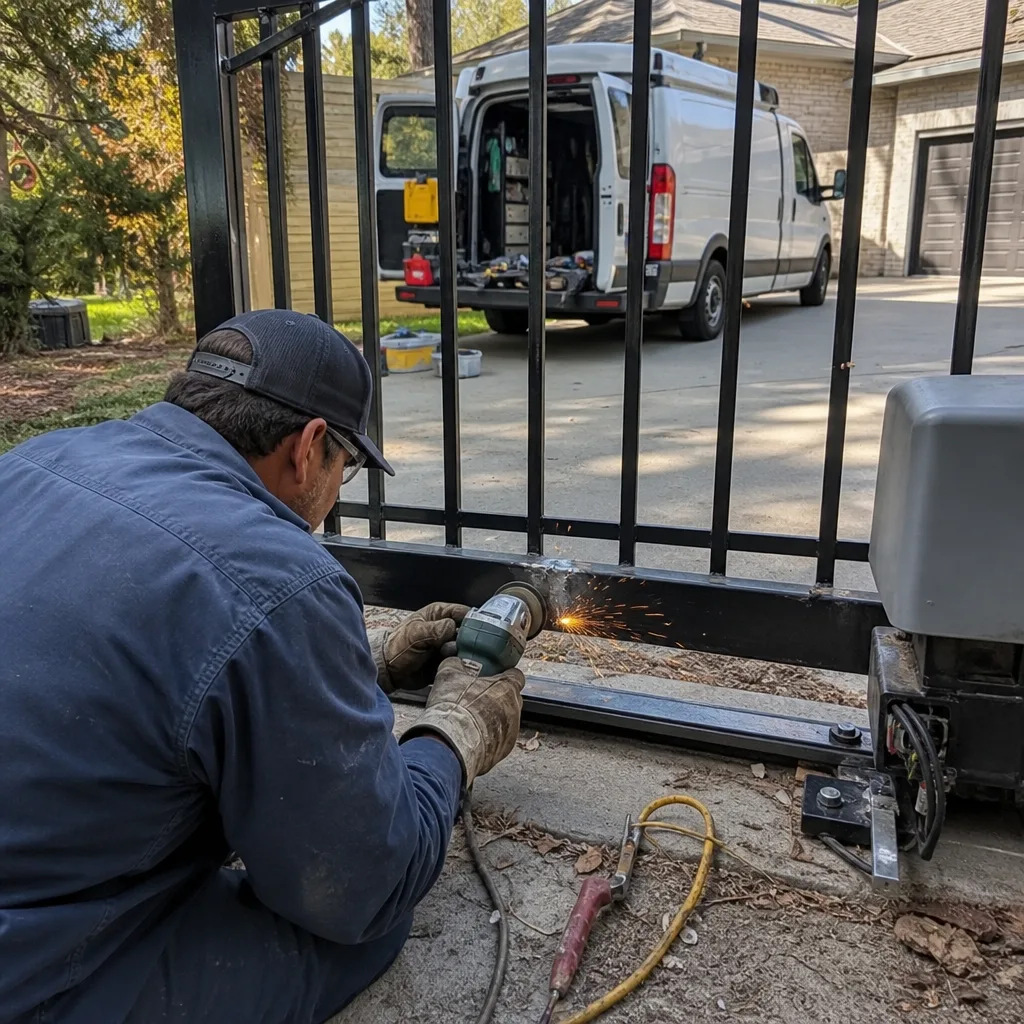
There’s a reason we keep limit switches at the top of this guide and most gate companies never mention them. They’re small, they’re cheap, and they’re the single most common source of “the gate won’t stop in the right place” calls in Conroe. We’ve also seen them mis-diagnosed as motor failures more times than we can count.
Here’s what a limit switch is, in one clause: a mechanical or magnetic switch that tells the motor when the gate has reached the end of its travel. When it’s set correctly, the gate stops precisely at open and closed positions every time. When it’s not, the gate slams into the end stops, reverses unexpectedly, or stops short and leaves a gap.
In Conroe, limit switches drift for a specific reason. The same soil movement that shifts posts also shifts the physical position of the gate in its travel arc. A limit switch that was set at 87 degrees of travel on a gate whose post has moved four degrees now allows 91 degrees of travel. That extra four degrees means the gate hits the mechanical end stop instead of stopping on the limit, and every time it hits that end stop, it transfers a shock load through the gate to the motor gearbox.
What a mis-set limit switch looks like in practice:
- The gate slams at the end of travel instead of stopping smoothly.
- The gate reverses direction immediately after reaching the closed position.
- The gate stops three to six inches short of the latch post, leaving a gap.
- The motor hums for a second after the gate stops, then shuts off.
None of those symptoms require a new motor. They require someone to reset the limit switch position, re-check the post alignment, and record the new setting. We record limit-switch positions on every visit, in degrees, and leave that number in your documentation. When the gate drifts again next season, the record tells us exactly how much it moved and whether the post is still shifting or the switch itself is failing.
A Ghost Controls or Mighty Mule opener uses a different limit-setting method than a DoorKing or Elite, but the failure mode is the same: the setting drifts out of alignment with the physical gate position. Don’t accept “the motor is shot” as a diagnosis until someone has checked the limit switches and shown you the readings. A limit adjustment is under $125 on most systems. A motor replacement is ten times that.
Gate Repair Cost Categories You Can Check Estimates Against
Here are the repair categories we quote in Conroe, broken down by typical range and what’s actually included. Use these as a sanity check against any verbal estimate you receive. If a number is dramatically outside these ranges, ask why.
| Repair Category | Typical Conroe Range | What It Includes |
|---|---|---|
| Limit switch adjustment or replacement | $95 – $185 | Switch reset or replacement, travel test, cycle count verification |
| Hinge replacement (pair) | $210 – $480 | Hinge fabrication or supply, bolt replacement, gate re-hang |
| Post stabilization (shim and re-plumb) | $175 – $390 | Post straightening, shim installation, hinge reset |
| Full post reset with deeper footing | $650 – $1,200 | Old footing removal, new 36-48″ footing, post reset, re-hang |
| Weld seam remediation (surface rust) | $145 – $320 | Wire-wheel removal, zinc primer, topcoat |
| Weld seam repair (structural) | $275 – $550 | Cut-out and re-weld, grind flush, primer |
| Swing-gate motor replacement | $850 – $1,400 | Motor, arm bracket, limit setup, safety check |
| Slide-gate motor replacement | $1,100 – $1,800 | Motor, rack alignment, limit setup, safety check |
| Photo-eye alignment or replacement | $90 – $220 | Beam alignment, sensor replacement where needed, test |
| Control board replacement | $275 – $650 | Board, programming, limit reset, full cycle test |
These ranges assume a standard residential gate in Conroe. Gates on long driveways in areas like Walden Road or along FM 3083 that require longer cable runs or additional conduit will run higher. Gates with decorative ironwork that requires fabrication will run higher. The point is not that you should diagnose your own gate, but that you should be able to tell whether a quote is in the right universe.
Every price we hand out is written before work starts, in line with Haven Standard Clause 1: have it in writing. No verbal estimate, no “we’ll see once we open it up” pricing. If a company can’t tell you the price before beginning, that’s a red flag most Conroe homeowners don’t catch until the invoice arrives. For motor and opener work specifically, see our Gate Motor & Opener in Conroe breakdown for what each brand’s replacement actually involves.
What a Post-Repair Record Should Actually Include
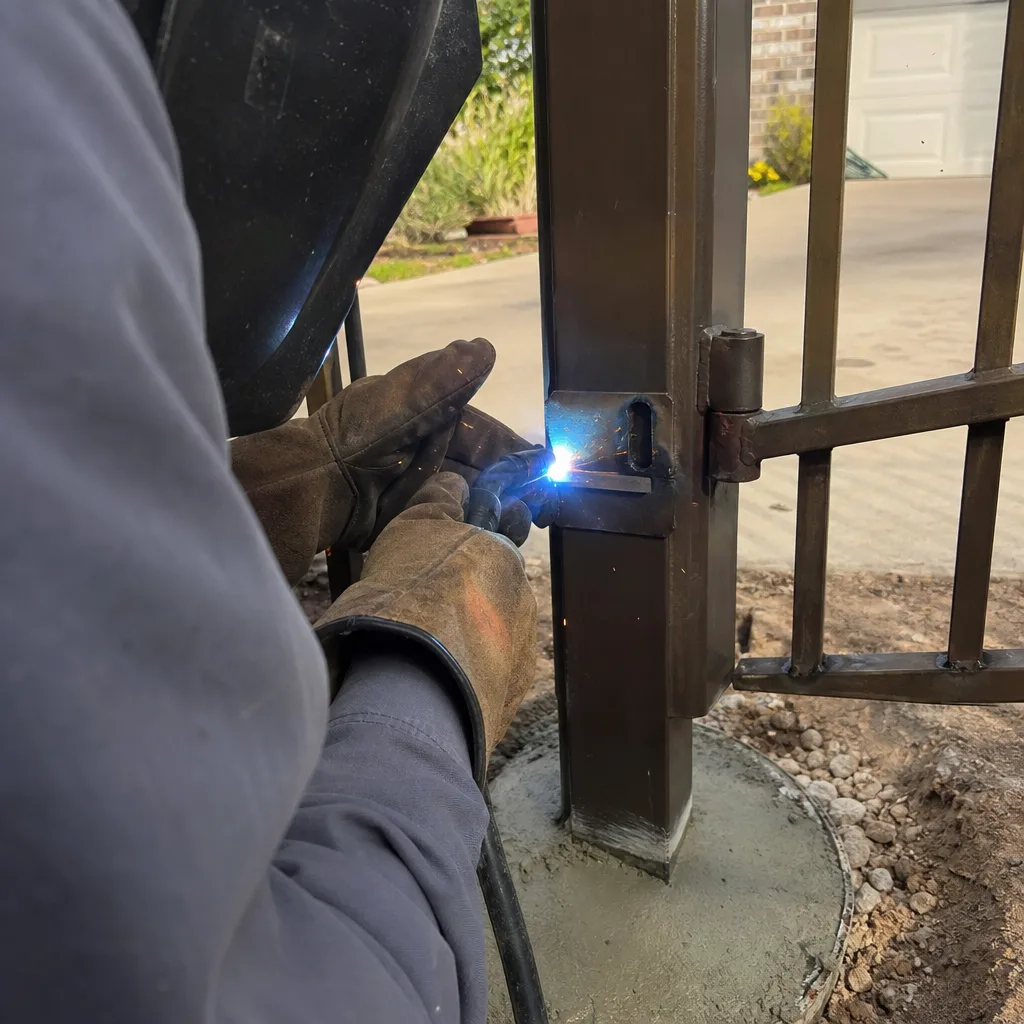
Every repair visit should end with a document. Not a receipt. A document. The difference matters more in gate work than almost any other trade because the components are interdependent: a motor setting depends on the gate weight, the gate weight depends on the hinge alignment, and the hinge alignment depends on the post position. Six months after a repair, when something drifts, the record tells the next technician what was set, what was replaced, and what was left alone.
Here’s what a complete post-repair record contains:
- A description of the problem as found. Not “gate not working.” Something like: “Limit switch set at 91 degrees; gate travel measured at 94 degrees; post lean measured at 3 degrees out of plumb toward the street side.”
- Wiring diagram or labeled photo of the control board. Every connection photographed before and after. If a wire gets pulled loose next year, the next technician doesn’t guess which terminal it belongs on.
- Limit-switch readings in degrees. Before and after. This tells the next visit exactly how much drift occurred.
- Torque specs on hinge bolts and post fasteners. In foot-pounds. If a hinge comes loose, the record tells you whether it was torqued correctly and has failed, or was never set right.
- Photo log of everything touched. The hinge plate before and after. The post collar. The motor mounts. The control board. The completed repair.
- Part numbers with brand names. “DoorKing part #8500-081 gear set” not “replaced gear.” The part number is what lets us match it exactly next time.
- Date, technician name, and signature. Accountability attaches to a person, not a company name.
This is the documentation habit Adrian Vance brought out of commercial access-control work starting in 2014, and it’s the same standard we apply to every residential gate in Conroe. The absence of this record is why some gates get “fixed” every year and never stay fixed. Each new technician starts from zero, re-diagnoses from scratch, and bills you for the privilege. A documented record breaks that cycle. Under Haven Standard Clause 4, every visit includes this documentation at no additional charge, and if you already have a written estimate from another company, we’ll review it for free as a second opinion.
Gate Company vs. Gate Specialist: The Difference That Matters
Most fencing companies in Conroe install gates. A smaller number repair them. Fewer still repair them with the documentation habit and brand depth that separates a gate specialist from a general fence contractor. The distinction isn’t snobbery. It’s about what happens after the truck leaves.
A fence company that installs gates as a sideline typically works with one or two automation brands. When a customer has a DoorKing on the gate and the fence company only stocks Linear parts, the solution is often “replace the whole operator.” That’s not because the customer needs a new operator. It’s because the company doesn’t have the board-level diagnostic experience for DoorKing, and replacement is the only confident fix they can offer.
A gate specialist services multiple brands because they’ve been inside all of them. We repair Ghost Controls, DoorKing, Elite, Mighty Mule, and five other major automation brands without steering you toward a replacement unless the existing motor is genuinely beyond economical repair. The difference shows up in the repair record: a specialist can tell you the limit-switch reading, the gear-train backlash measurement, and the exact part number that failed. A generalist can tell you “it needs a new motor.”
The second difference is licensing scope. In Texas, gate work sits at the intersection of fence contracting, low-voltage electrical work, and access-control installation. A company licensed as a fence contractor may not hold the electrical license required for line-voltage gate operators. That matters when the operator needs a dedicated circuit run or the safety edge wiring needs to be integrated into the home’s electrical system. Ask any company you’re considering whether they hold the appropriate license for electrical work on operators, and ask to see it. We show ours.
The third difference is the documentation habit. We covered the post-repair record earlier. A generalist leaves a receipt. A specialist leaves a record. When a gate fails again, the generalist starts over. The specialist starts from the last documented reading and diagnoses the change. That’s the difference between a $125 adjustment and a $1,200 replacement, and it’s the difference between a gate that stays fixed and a gate that gets “fixed” every spring.
If you’re planning a new install rather than a repair, our Gate Installation in Conroe guide covers what a properly documented install looks like from day one.
When to Repair and When to Replace
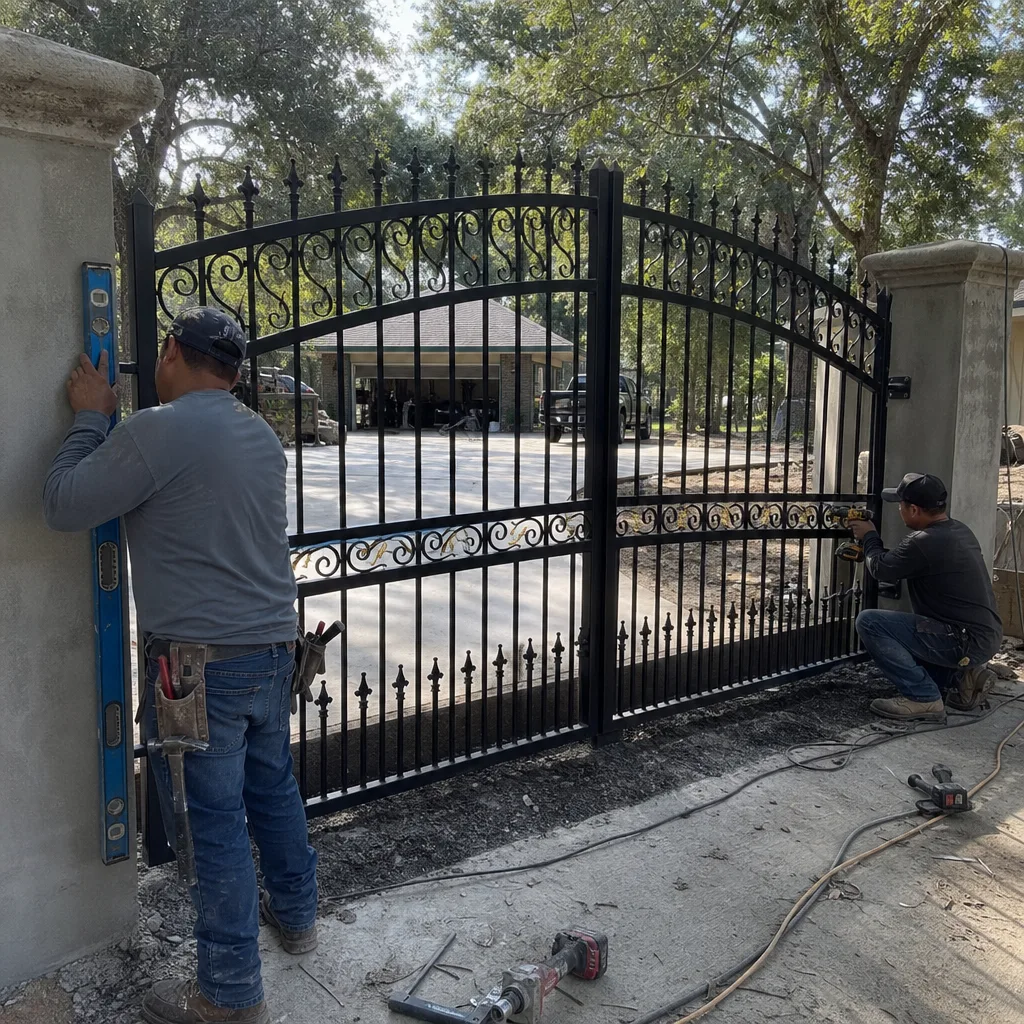
The repair-versus-replace decision is usually financial, but the calculation is different for Conroe homeowners because of the soil factor. A gate on shifted posts is a losing repair proposition. A gate on stable footings with a failed motor is almost always worth repairing.
Here’s the framework we use, and it’s the same one you should apply before any estimate:
- Check the post stability first. If the posts have shifted more than five degrees or the footings are cracked through, no repair to the gate or motor will last. The post work has to happen regardless. Add that cost to either decision.
- Age the components. A motor under six years old with a failed limit switch or a bad capacitor is a repair. A motor over twelve years old with a stripped gear train is a replacement. The gear set alone on a twelve-year-old DoorKing can cost 70 percent of a new motor.
- Look at the gate itself. If the gate structure has rust-through at multiple weld seams or the bottom rail is bowed from years of dragging, the iron is done. You don’t rebuild a rusted gate and you don’t put a new motor on it.
- Factor the documentation gap. If no one has records on the gate, the first visit is a diagnostic. That’s a real cost, and it should be accounted for honestly, not buried in a quote.
Our rule is straightforward: repair what’s repairable, replace what’s not, and document both. We’ve talked more Conroe homeowners out of motor replacements than into them because the actual problem was a $95 limit switch or a shifted post. That’s not charity. It’s the same commercial instinct Adrian Vance developed maintaining access-control systems where downtime costs real money: fix the failure, not the symptom, and record what you did.
For the full picture on repair scope, see our Gate Repair in Conroe page, which walks through the repair categories in more detail.
Common Mistakes to Avoid
- Replacing the motor without checking the post. If the post has moved, a new motor inherits the same bind and fails inside 18 months. Check post alignment before spending motor money.
- Accepting a verbal estimate. In Conroe, where soil movement changes repair scope, a verbal number is a guess. If the company won’t put it in writing, walk away.
- Ignoring surface rust at weld seams. Conroe’s humidity turns cosmetic rust into structural failure at the toe of the weld, faster than flat-surface rust would suggest. Treat it early.
- Painting over corrosion. Paint seals in moisture and hides the problem until the joint fails completely. Removal, primer, and topcoat is the only treatment that lasts.
- Accepting “it needs a new motor” without limit-switch readings. A mis-set limit switch is under $125 to fix. A motor replacement is ten times that. Ask for the readings.
- Not documenting repairs. Every visit without a record resets the diagnostic clock. You pay for the same diagnosis twice.
- Hiring a fence company for a motor problem. Fence installers hang gates. Gate specialists repair the automation on them. The skill sets don’t fully overlap.
When to Call a Professional

Call a professional the moment you see post movement, hinge-gap changes, or weld-seam rust that’s deeper than surface color. The same goes for any limit-switch symptom: slamming, reversing, stopping short. These problems compound, and a Conroe gate that’s been binding for a season has already cut the life of its motor. A professional will check the post first, document what’s wrong, and hand you a written price before any work starts. Gate Repair services from Vance Gate Repair Conroe include free estimates in Conroe. Call (936) 297-5126 and tell us what you’re seeing. No voicemail loop, no callback queue, no pressure. We’ll be the one who answers.
Frequently Asked Questions
Gate repair in Conroe ranges from $95 for a limit switch adjustment to $1,800 for a full slide-gate motor replacement. Most residential repairs fall between $150 and $650 depending on whether the issue is mechanical (hinges, posts, weld seams) or electrical (limit switches, boards, photo-eyes). Call (936) 297-5126 for an exact quote. Estimates are free and written before any work starts.
The three most common causes in Conroe are expansive clay soil shifting the gate posts, corrosion at weld seams accelerated by year-round humidity, and drifted limit switches that allow the gate to hit its mechanical end stops. All three are repairable, but only if they’re diagnosed correctly, and the difference between a $95 fix and a $1,200 motor replacement depends on which one you’re actually dealing with.
Yes. A live person answers our phone 24 hours a day, seven days a week, and same-day service is available in Conroe for most repair calls. Limit switch adjustments, hinge replacements, and weld seam repairs can usually be completed in a single visit. Post resets and motor replacements may require scheduling, but the diagnostic visit always happens fast.
A proper repair includes a written price before work starts, a documented photo record of what was found and what was changed, limit-switch readings in degrees, torque specs on fasteners, and part numbers with brand names. If a company hands you a receipt with none of that, you’ve paid for a band-aid, not a repair. Under Haven Standard Clause 4, every visit we complete includes this documentation at no extra charge.
We service nine automation brands including Ghost Controls, DoorKing, Elite, and Mighty Mule, plus LiftMaster, FAAC, BFT, Linear, and Viking. We repair the motor already on your property rather than steering you toward a replacement. If your existing motor is beyond economical repair, we’ll show you the gear-train wear or board damage in photos and walk you through the replacement math before you commit.
Repair if the motor is under six years old and the failure is a limit switch, capacitor, or board. Replace if the motor is over twelve years old with a stripped gear train or rusted motor mounts. The post condition matters more than the motor’s age in Conroe. If the post has shifted, anything bolted to it fails faster, and replacing the motor without fixing the post is wasted money. Call (936) 297-5126 for a written assessment of your specific gate.
The Bottom Line
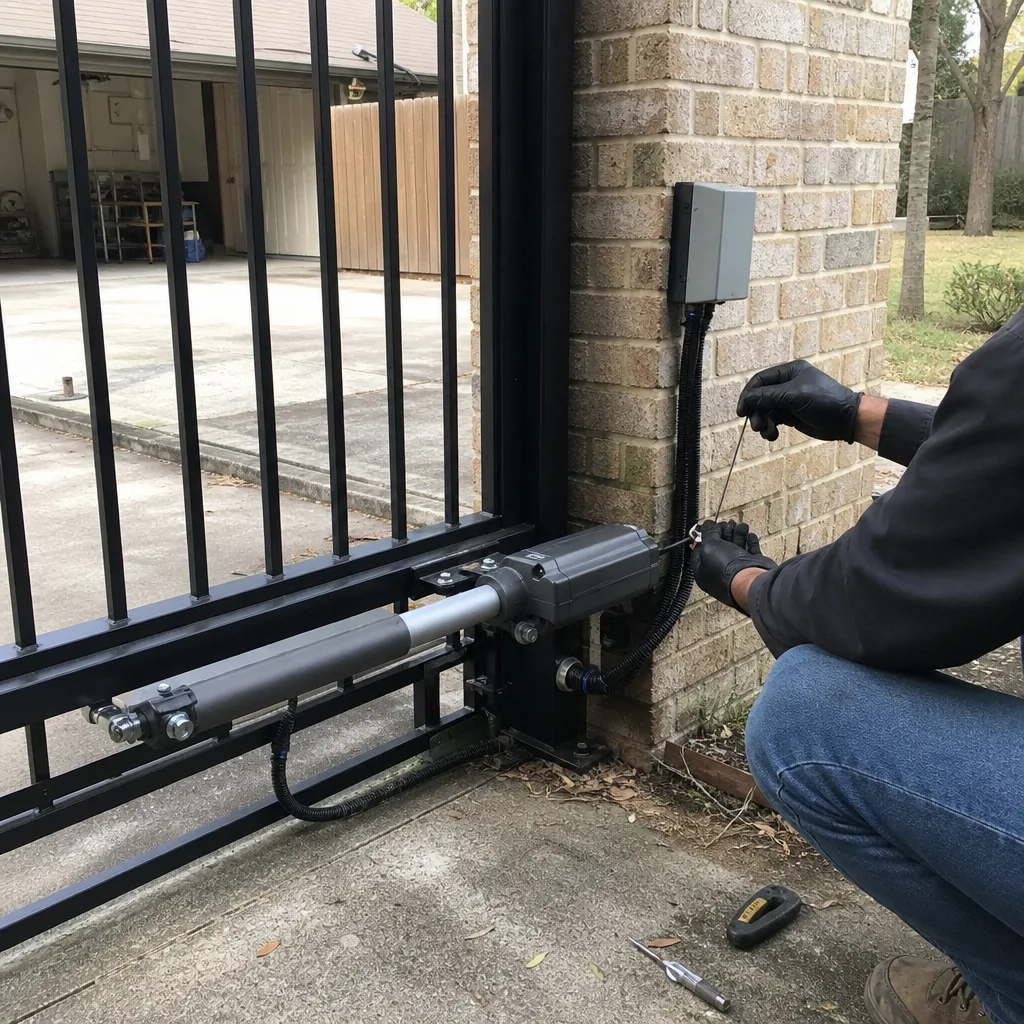
Conroe’s clay soil and humidity create gate failures that generic repair advice doesn’t cover. The post moves, the limit switch drifts, the weld seams rust, and the motor takes the blame. Understanding the actual root cause before you spend a dollar is the difference between a lasting fix and a recurring invoice. We built our whole process around that principle: a written price before work starts, a documented photo record on every visit, and a 365-day promise that if the repair isn’t right, we make it right. No argument, no fee, no expiration date. The gate stays fixed or we return.
Written by Adrian Vance, Owner at Vance Gate Repair Conroe, serving Conroe since 2014.