
Last updated September 20, 2026
Free on-site gate assessment - hinges, posts, and your LiftMaster or Nice gate operator checked before anything is quoted
The assessment is free and the quote is the invoice.
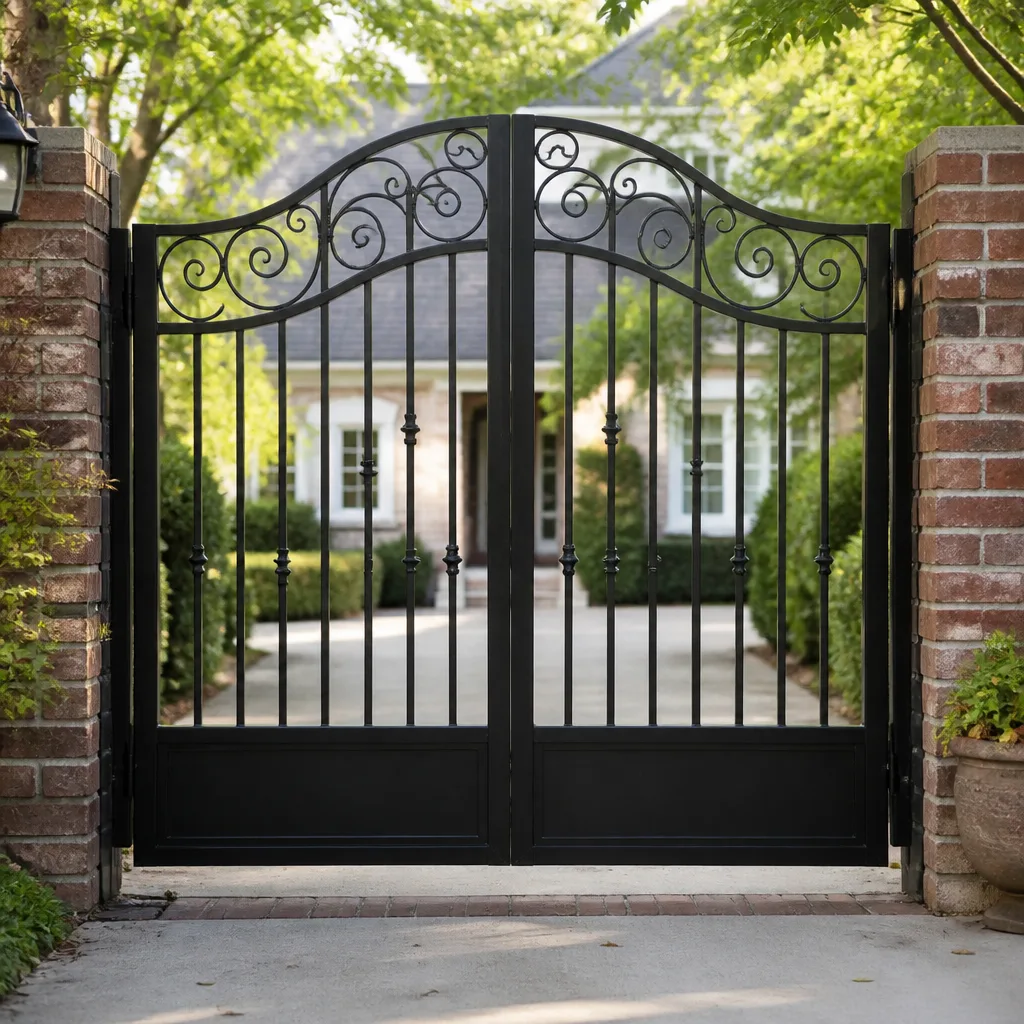
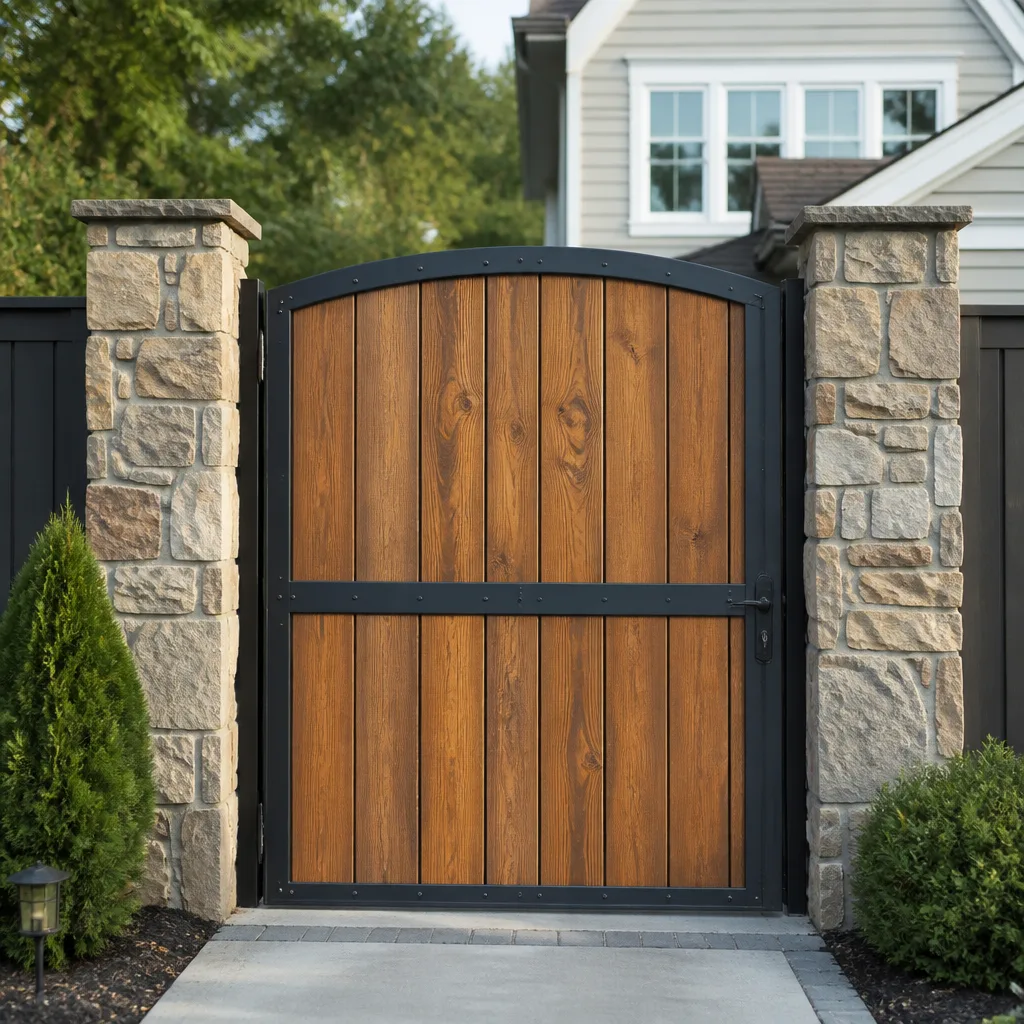

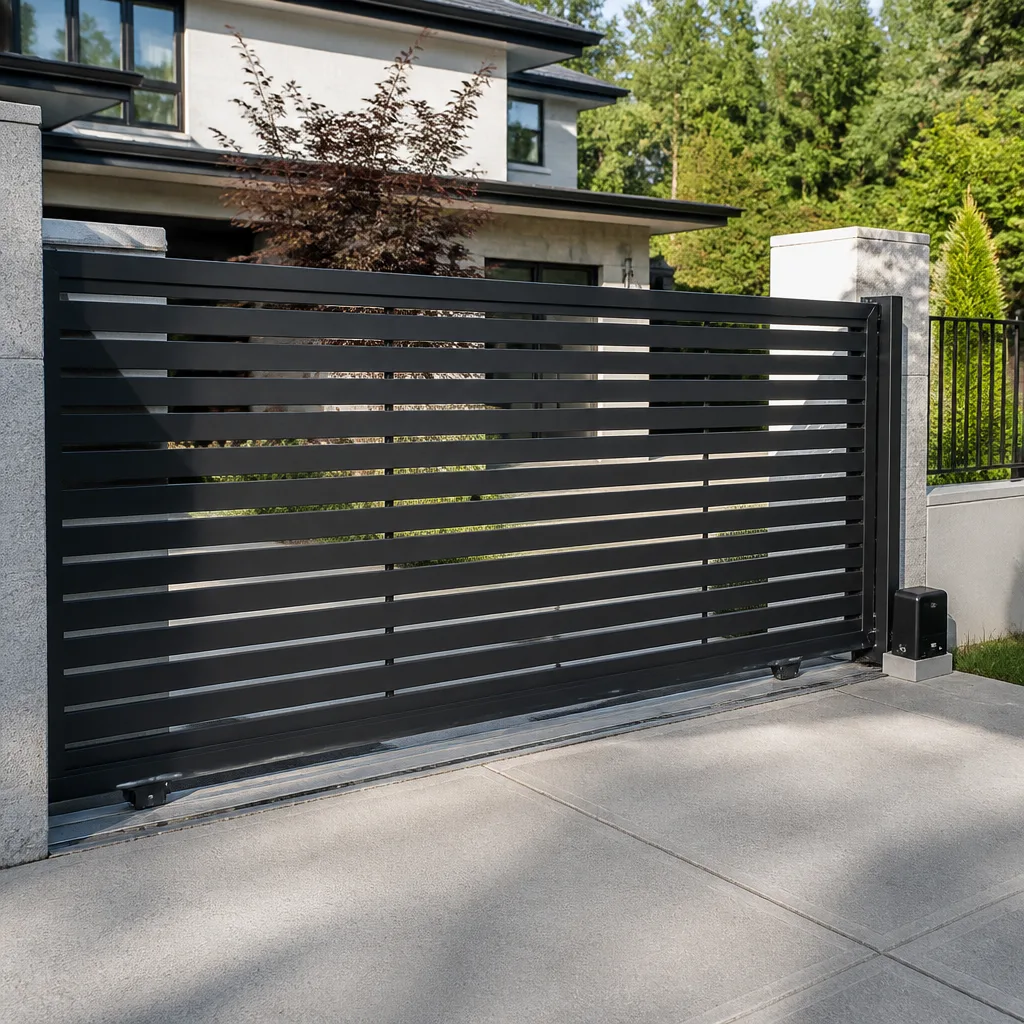
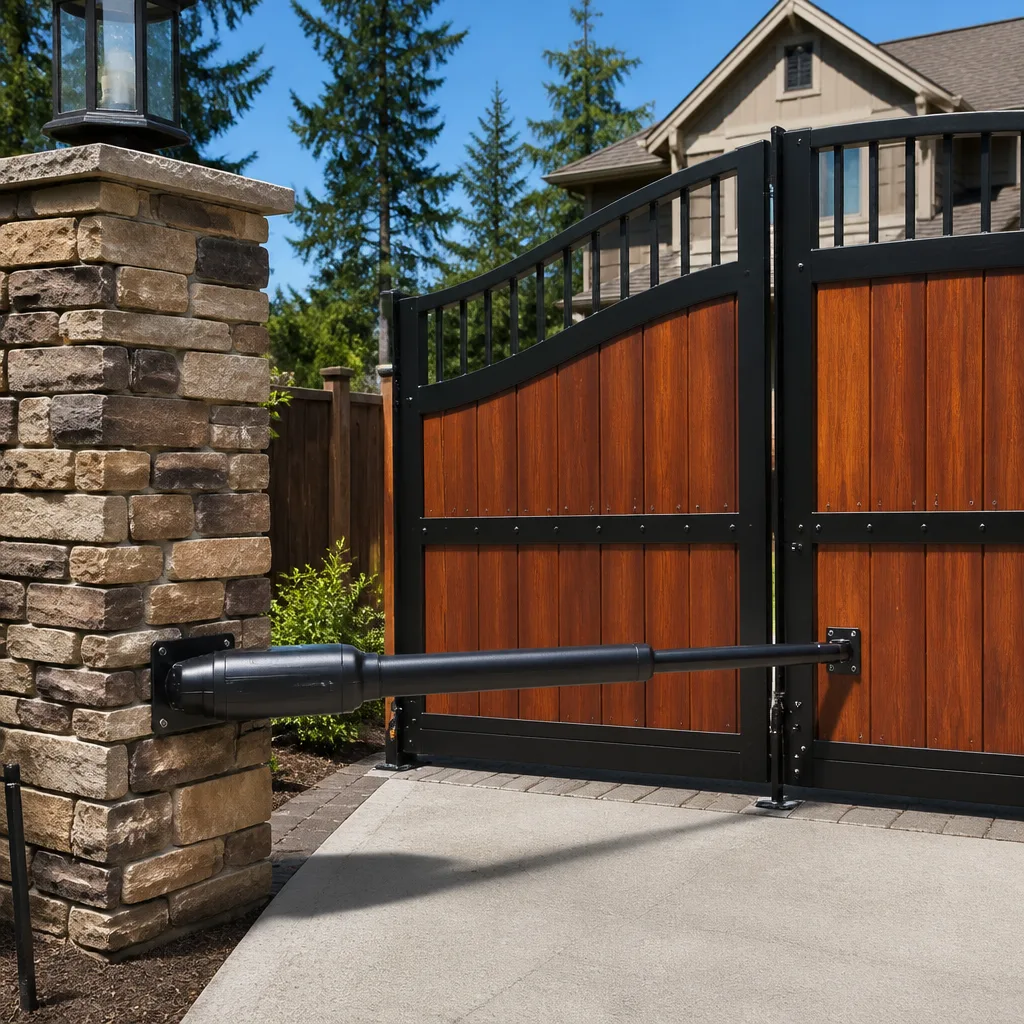
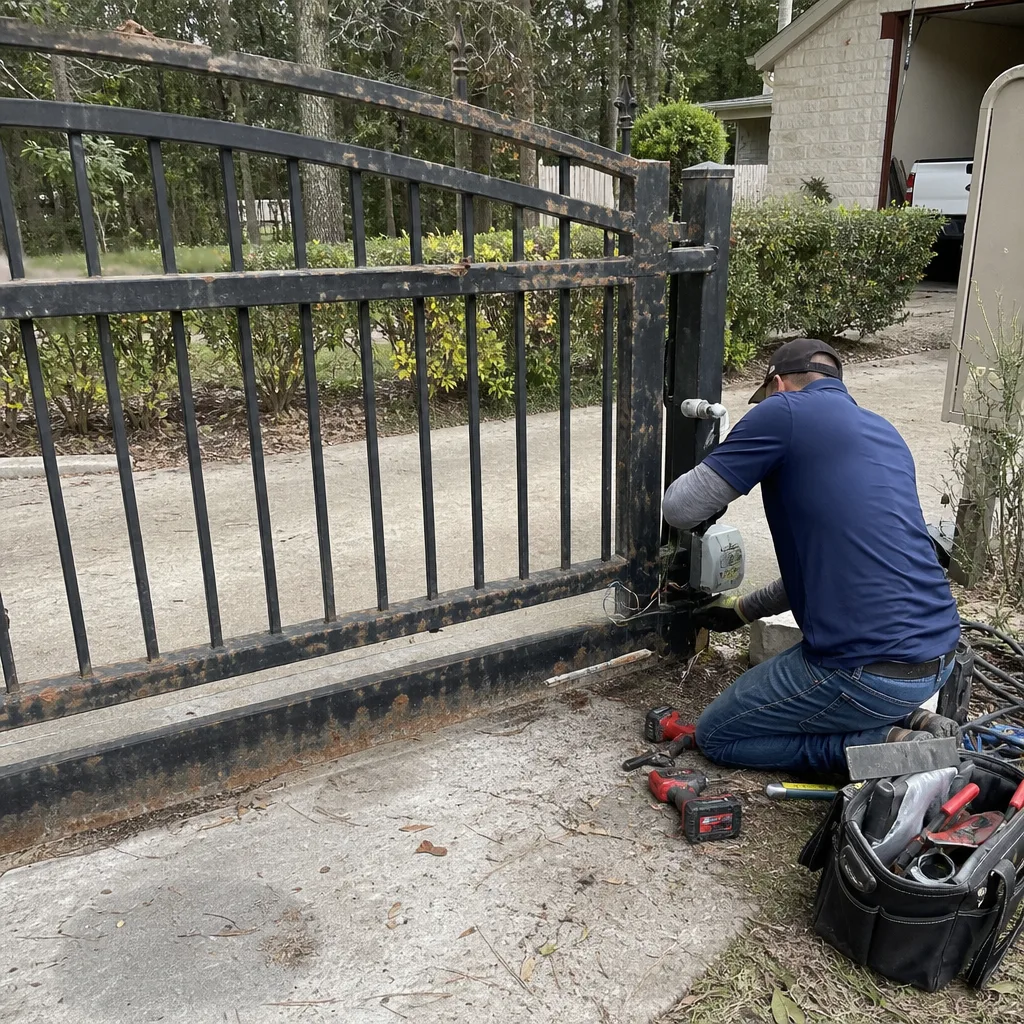 Before
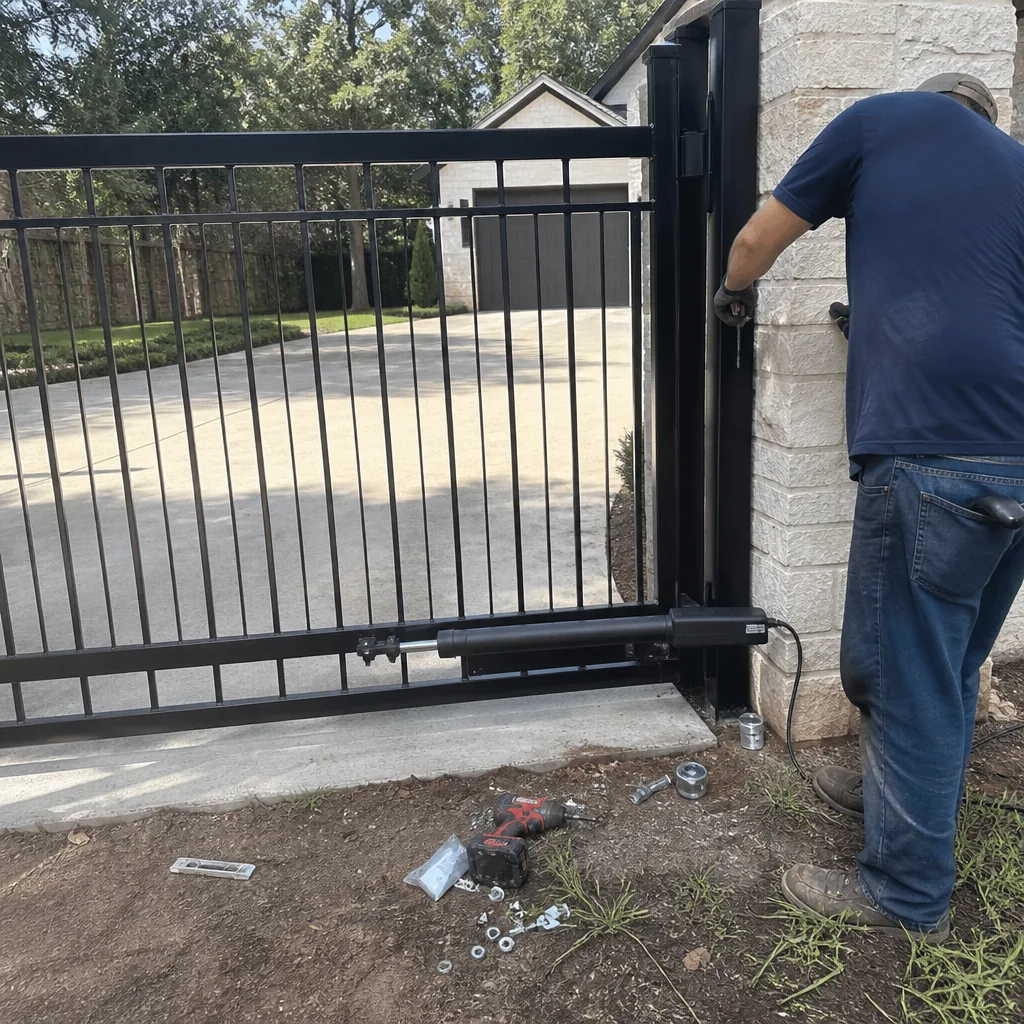 After
After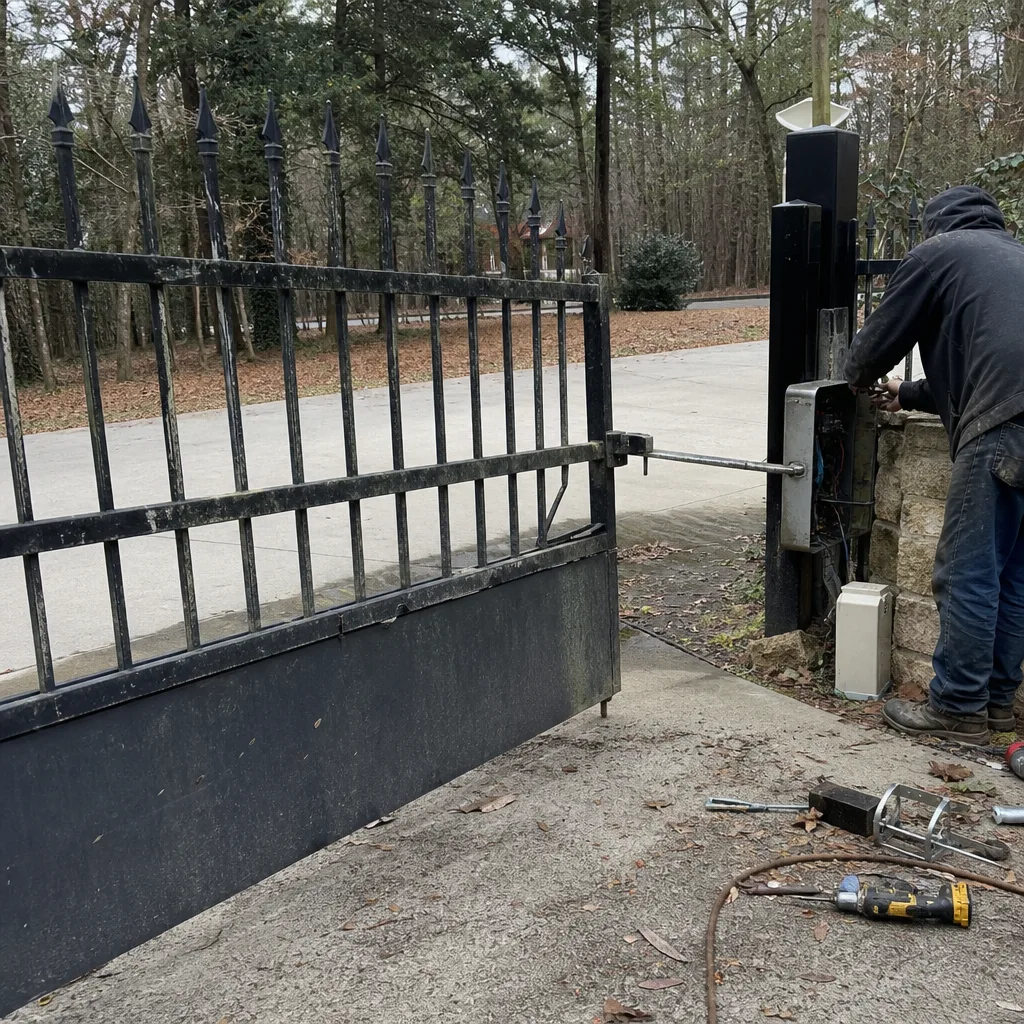 Before
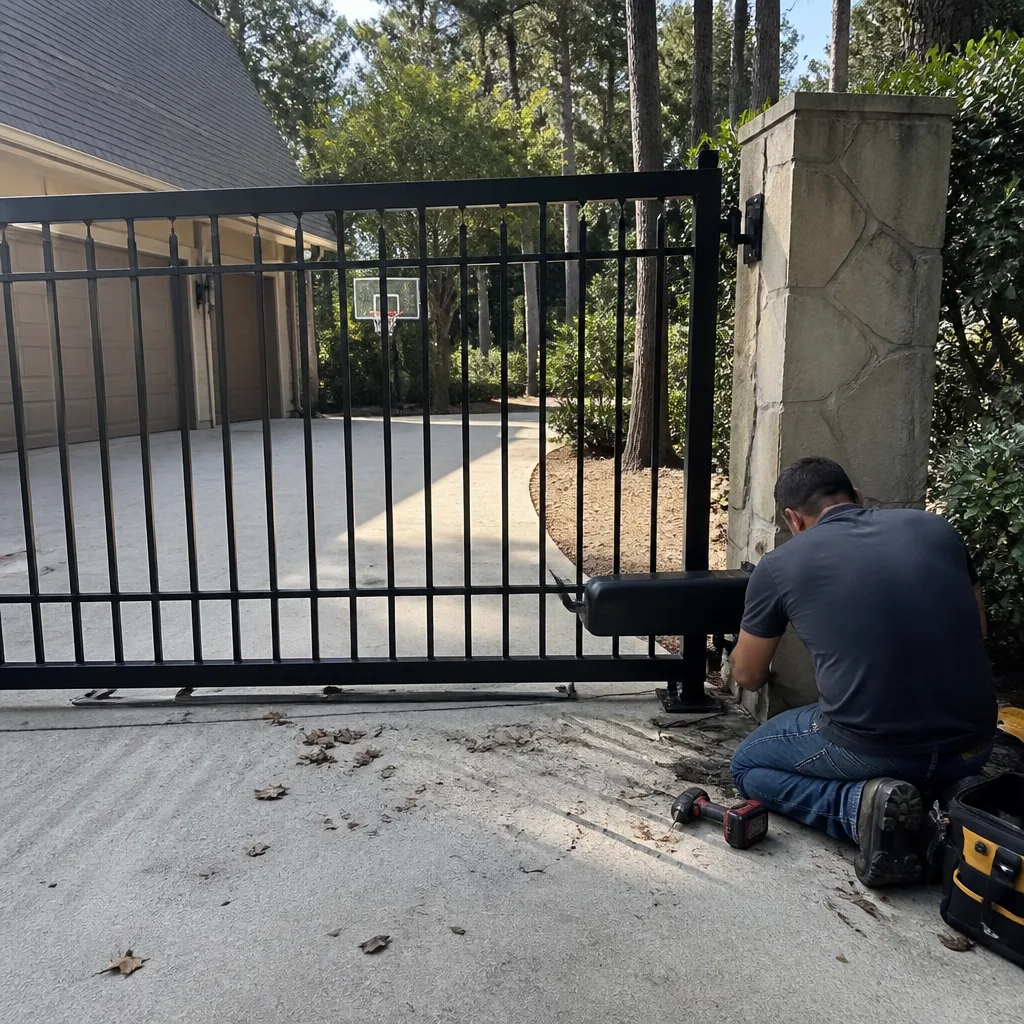 After
After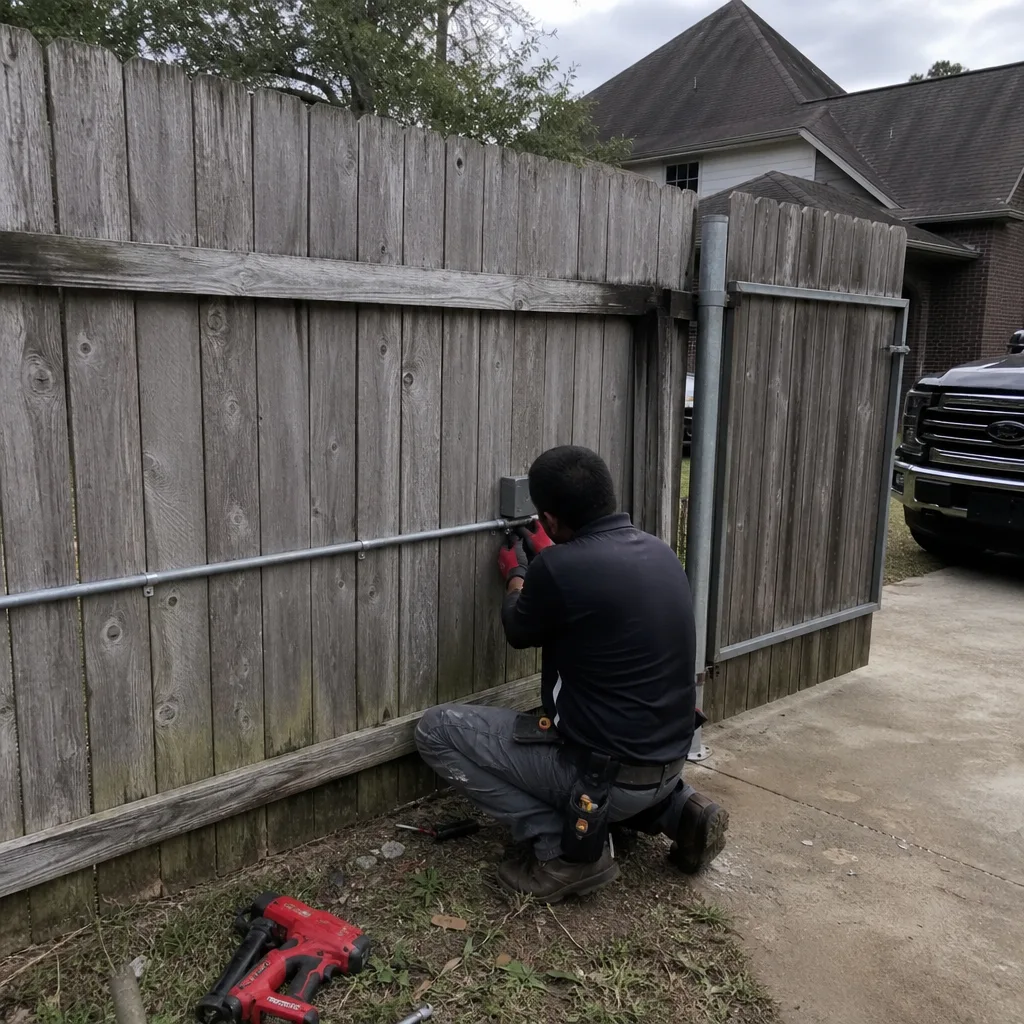 Before
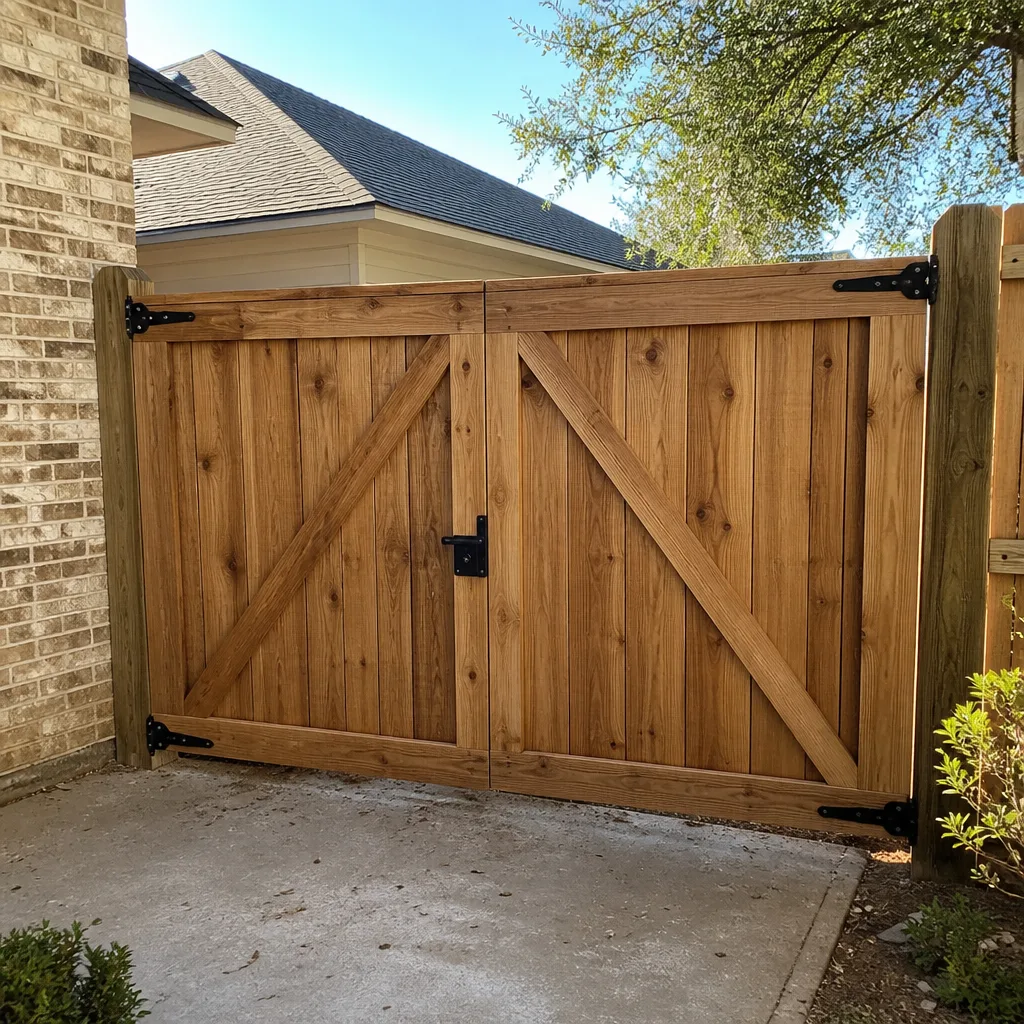 After
AfterGate Repair Permits, Codes & Inspections in TX: What You Need to Know
A gate that crosses a property line by six inches, encloses a pool, or exceeds a height threshold defined in your municipality’s fence ordinance can require a permit even if it’s a repair and not a new installation. In Conroe, that determination is made at the city level, not the county level, and the answer changes depending on whether you’re inside city limits or in unincorporated Montgomery County. This guide walks through the specific repair scenarios that trigger permits in Texas, the pool barrier codes that surprise most homeowners, and the documentation you should ask for before any contractor touches your gate. For related reading, see our Gate Repair Warning Signs: A Conroe Homeowner’s Reference Guide.
Quick Answer
Most gate repairs in Texas do not require a permit: replacing a hinge, changing a motor, or welding a cracked post is generally exempt. But repairs that alter the gate’s height, footprint, pool-barrier compliance, or a shared property line can trigger permit requirements, as can installing a new gate in a location that wasn’t previously gated. When a permit is required in Conroe, it flows through the city’s Building Department; in unincorporated Montgomery County, there is no county-level permit office for residential gate work, so the rules default to deed restrictions and state code.
Table of Contents
- Which Gate Repairs Actually Trigger a Permit in Texas
- Repairs That Are Universally Exempt (and Why)
- Conroe City Limits vs. Montgomery County Unincorporated: The Jurisdiction Split
- Pool Barrier Codes and Gate Repair: What IRC Section AG105 Actually Requires
- HOA Covenants vs. Municipal Code: Which One Controls Your Gate
- What Documentation to Request From Any Gate Contractor
- How to Check Your Own Gate’s Permit Status: A Step-by-Step Path
- What Permits and Inspections Cost in Conroe and Montgomery County
BeforeAfterWhich Gate Repairs Actually Trigger a Permit in Texas
Texas does not have a single statewide gate permit requirement. Residential gate regulation lives in three places: your municipality’s building code, your county’s floodplain or development rules if you’re in an unincorporated area, and your HOA’s deed restrictions. The repair scenarios below are the ones we’ve seen require a permit or an inspection in Conroe and the surrounding Montgomery County communities.
The most common permit trigger is a repair that changes the gate’s structural footprint. If you’re replacing a single swing gate with a double swing gate that requires new posts set in new concrete, that’s no longer a repair under most municipal code definitions. It’s an alteration. The City of Conroe’s building permit requirements treat any fence or gate alteration that changes height, location, or material composition as a new installation for permitting purposes.
A second trigger is height. Conroe’s fence and wall regulations, found in the city’s Code of Ordinances Chapter 10, set maximum heights for front-yard fences and gates, typically 4 feet for front-yard fencing in residential districts, with 8-foot allowances for side and rear yard lines. If your gate repair involves replacing a 4-foot gate with a 6-foot gate, that’s not a like-for-like repair. That’s a height alteration requiring a permit.
Pool barriers are the third trigger, and the one most homeowners miss. If the gate being repaired is part of a pool enclosure, any change to the latching mechanism, self-closing hinge, or gate height must meet the current version of IRC Section AG105, and Conroe requires a re-inspection when a pool gate’s compliance hardware is altered. More on that below.
Repairs That Are Universally Exempt (and Why)
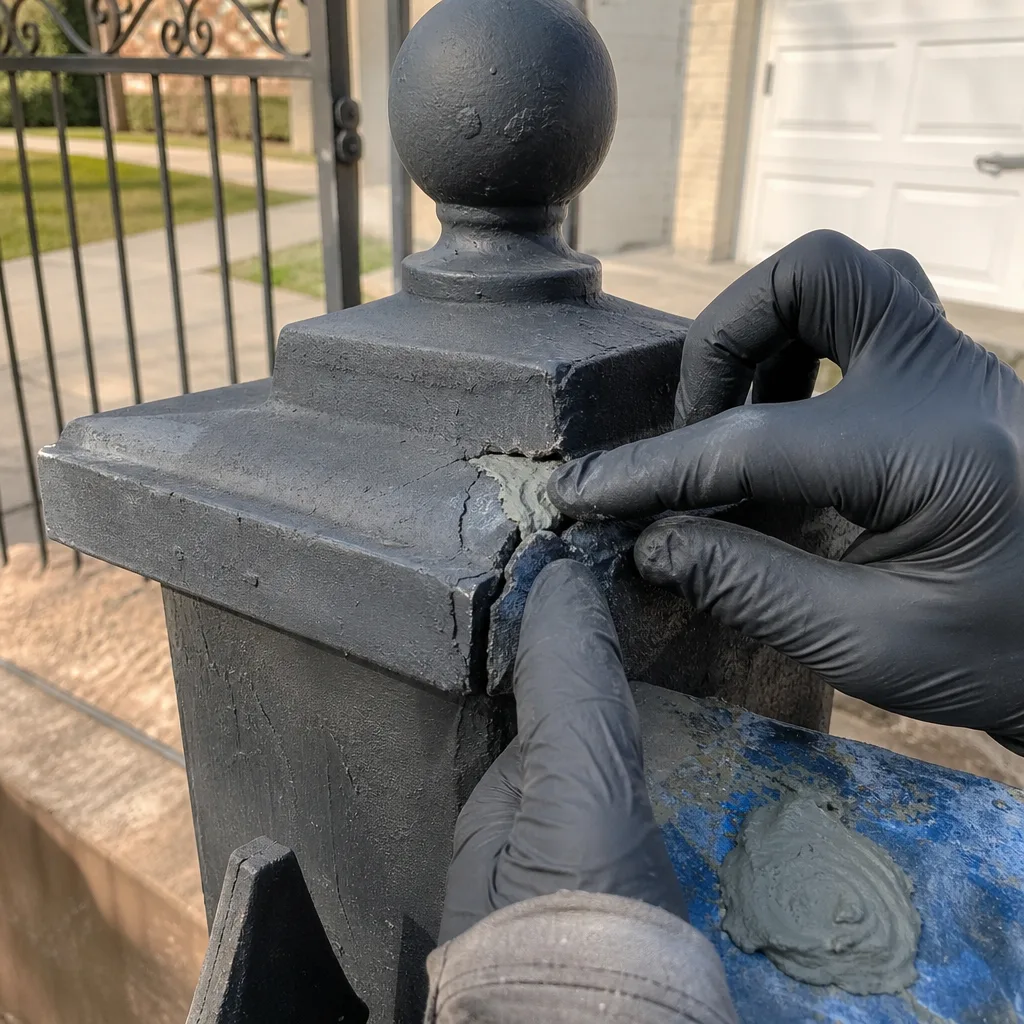
The exemption logic in Texas municipal codes is consistent: if the repair restores the gate to its original condition without changing height, footprint, material type, or automation method, it’s maintenance, not construction. Here’s what falls cleanly into the exempt category:
- Hinge replacement on an existing gate, including welding a cracked hinge plate back into place. The gate’s function and footprint don’t change.
- Motor and opener replacement when the new operator is installed on the existing pad and post location. Swapping a LiftMaster for a FAAC in the same spot is a repair, not an alteration.
- Circuit board replacement inside an existing operator housing. No permit office in Texas considers this construction.
- Post repair that doesn’t require a new concrete footer. Straightening and re-anchoring an existing post is maintenance.
- Photo-eye realignment and safety edge replacement. These restore the gate to its original compliant state, which is exactly what the code wants.
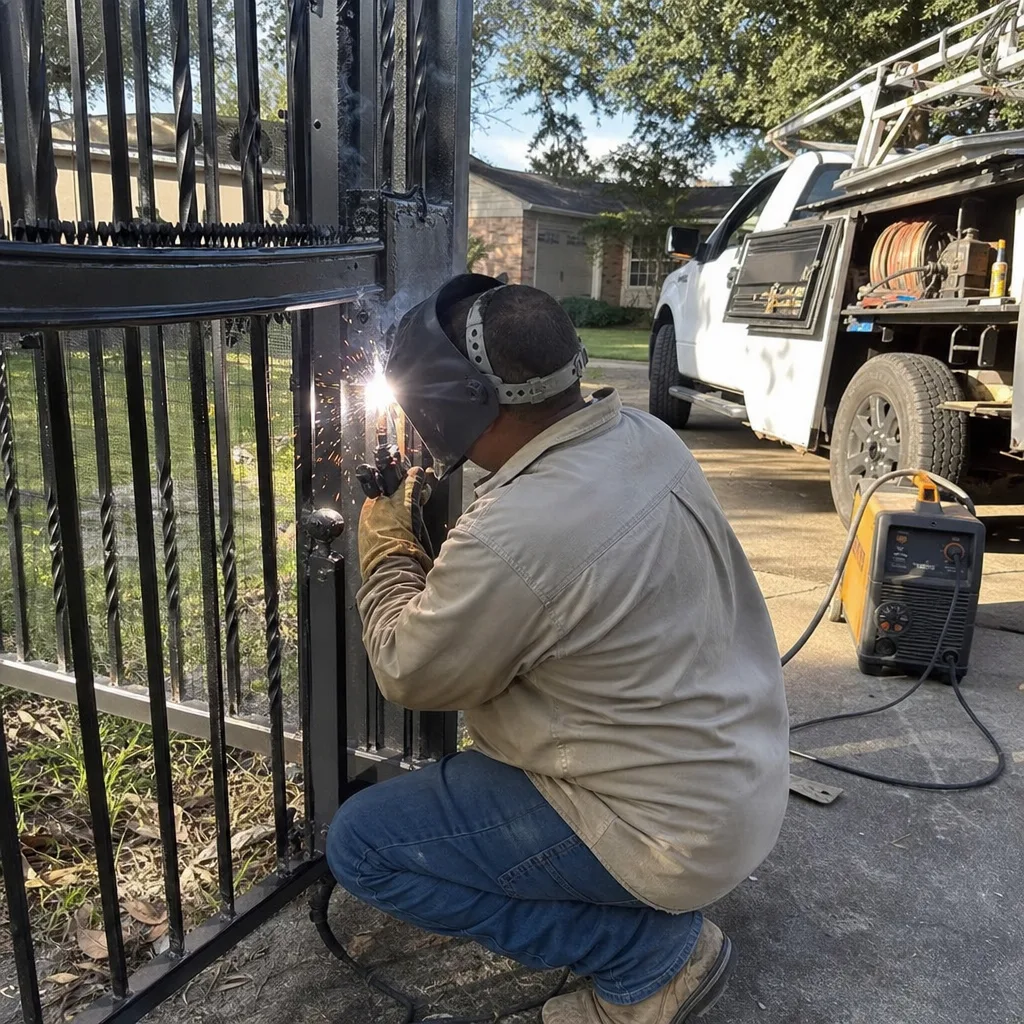
- Welding a crack in an existing gate frame, provided the gate’s dimensions don’t change.
The common thread: if you’re restoring what was already there, no permit. If you’re changing what’s there, start asking questions. In our experience serving Conroe homeowners since 2014, the line between exempt repair and permitted alteration is almost always drawn at height, footprint, and pool-barrier hardware.
Conroe City Limits vs. Montgomery County Unincorporated: The Jurisdiction Split
This is the single most confused point we hear from homeowners. Conroe is a home-rule city with its own building department, permit process, and inspection authority. Montgomery County does not operate a residential gate permit office for unincorporated areas. The rules are not the same, and the office you call is not the same.
If your property is inside Conroe city limits, you need to contact the City of Conroe Building Department on South Frazier Street (the department is located within the city’s Development Services office). They review gate and fence permit applications alongside fence permits because gates are regulated under the same Code of Ordinances chapter as fences. The application is typically a residential fence permit application that includes gate specifications.
If your property is in an unincorporated Montgomery County area with a Conroe postal address, the City of Conroe has no jurisdiction over your gate. Montgomery County will not permit your residential gate either. What governs your gate in that scenario is a combination of the deed restrictions attached to your subdivision, any MUD district requirements, and Texas state law on property line structures. That last part matters: a gate built on or across a property line in an unincorporated area is governed by Texas Property Code Chapter 41, and disputes are resolved civilly, not through a permit office.
The practical takeaway: check your address. If your utility bill says City of Conroe, the city’s rules apply. If it says Montgomery County or an emergency services district, you’re in the unincorporated zone, and your gate’s compliance is governed by deed restrictions and state property law.
Pool Barrier Codes and Gate Repair: What IRC Section AG105 Actually Requires
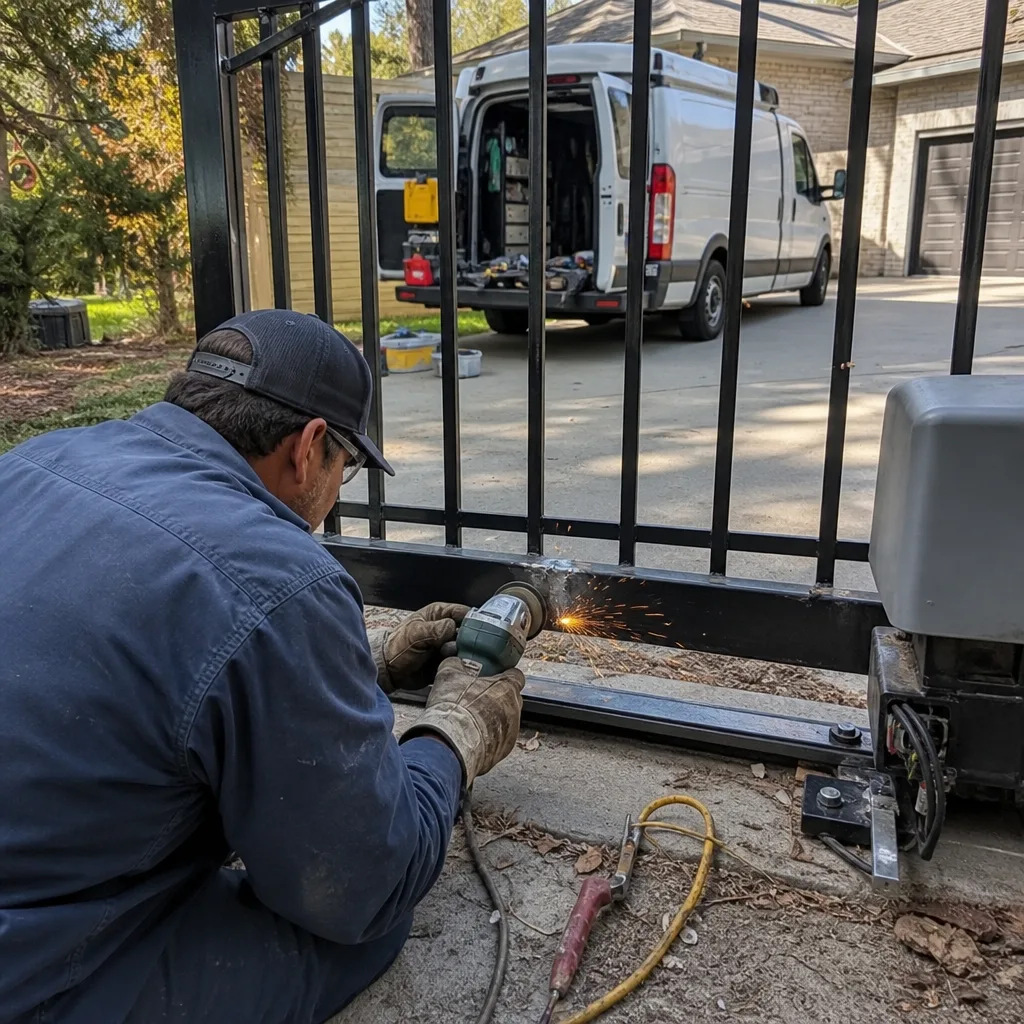
If your gate is part of a pool barrier, the repair rules change. IRC Section AG105 governs pool barriers in Texas municipalities that have adopted the International Residential Code, which includes Conroe. The section requires that pool barrier gates open outward away from the pool, are self-closing, and have a self-latching device at a specific height.
The specific requirement: gate latches on pool barriers must be at least 54 inches above grade, or on the pool side of the gate at least 3 inches below the top of the gate, or the gate must have no openings greater than 1/2 inch within 18 inches of the latch release mechanism. When a pool gate is being repaired, the question is whether the repair changes the gate’s compliance status.
Replacing a broken self-closing hinge on a pool gate is exempt. Replacing a pool gate latch with a different style that isn’t self-latching is not exempt, because you’re changing the compliance mechanism. In Conroe, pool barrier gates that have compliance hardware altered require a re-inspection through the city’s building department, and that inspection is typically triggered when a building permit has been pulled for the pool or the barrier. The city does not proactively inspect every pool gate repair, but if a home with a pool goes through a real estate transaction, a lender or insurer may request proof of barrier compliance.
We’ve seen this play out in the Conroe market repeatedly: a homeowner replaces a sagging pool gate with a lighter aluminum model, the new gate doesn’t have a self-closing hinge, and six months later the home inspection for a sale flags it. The fix is simple but the disruption is not. Any pool gate repair should keep the self-closing and self-latching hardware intact, and ideally document the latch height and hinge type before and after.
HOA Covenants vs. Municipal Code: Which One Controls Your Gate
When HOA covenants and municipal code conflict, the stricter standard controls. That’s the general rule in Texas, and it’s been litigated enough that most HOAs in Montgomery County now write their gate restrictions to match or exceed the city’s.
Here’s a common Conroe scenario: the City of Conroe allows an 8-foot side-yard gate, but your HOA covenants cap all fencing and gates at 6 feet. The HOA cap controls, because deed restrictions are private contracts that run with the land, and Texas courts enforce them unless they violate state or federal law. The city won’t step in to save you from your HOA.
The reverse scenario happens too: an HOA allows a 10-foot privacy gate on an acreage lot, but the city’s front-yard height limit is 4 feet. The city limit controls, because municipal zoning is police power. The city doesn’t care what your HOA said. If the gate exceeds the city limit, you can be cited, and the gate can be ordered modified or removed.
When the two conflict, the practical path is to apply for a variance from the stricter authority. If the HOA is stricter, you petition the HOA’s architectural review committee. If the city is stricter, you file a variance request with the city’s Board of Adjustment. Both processes are slow, and neither is free. The cheapest time to discover the conflict is before the gate is installed or altered.
What Documentation to Request From Any Gate Contractor
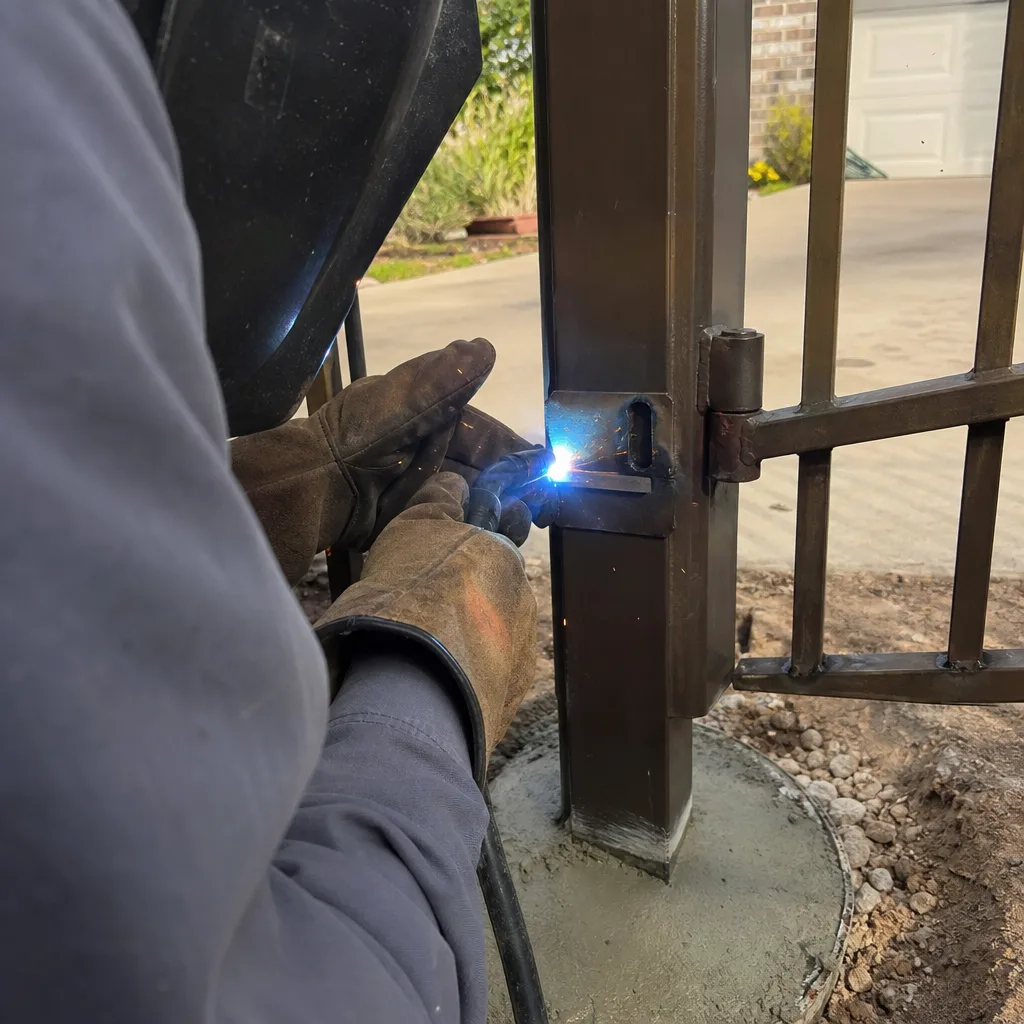
Every contractor will tell you they follow code. What separates a careful contractor from a careless one is whether they can show you the documentation. Ask for these four things before and after the work, and see our How to Hire a Gate Repair Contractor in Conroe: A Step-by-Step Guide for deeper vetting steps:
- A written scope of work that identifies whether the job is a repair or an alteration. The scope should state the gate’s current height, footprint, and automation method, and confirm whether those are changing. This is the document that tells you whether a permit conversation is even necessary.
- A written price before any work begins. In Conroe, the market norm is still a verbal estimate and a handshake. A written price protects you from the invoice that arrives after the gate is back in the air. We deliver a written price on every job under Haven Standard Clause 1, and we recommend you hold every contractor to that standard regardless of who you hire.
- A photo record of the work. Before-and-after photos of the hinge, latch, post, and operator mounting show what was changed and what was left alone. If a permit question arises later, the photos answer it. If a future technician needs to know what was done, the photos save them from rediscovering it.
- A statement of code compliance consideration. This doesn’t have to be a formal letter. It can be a line in the work order that says the technician checked the gate height against the applicable municipal fence ordinance and confirmed the repair didn’t alter it. What you’re looking for is evidence that the contractor thought about code compliance, not just assumed it.
One more thing worth asking: has the contractor worked on this gate automation brand before? A technician who’s only seen LiftMaster operators may not know that a FAAC board uses a different limit-setting procedure, and a mis-set limit switch on a 1,500-pound slide gate is a safety problem, not just a nuisance. The fix is to work with a company that services multiple brands rather than steering every customer toward a replacement. We work on nine brands for exactly that reason: Elite, Mighty Mule, FAAC, LiftMaster, and five others, so the motor that’s already on the property can usually stay there.
How to Check Your Own Gate’s Permit Status: A Step-by-Step Path
Before you call a contractor, spend 30 minutes here. The answers you find will tell you whether a permit conversation is even needed. For more guides & resources, visit our blog.
- Confirm your jurisdiction. Look at your water bill or use the City of Conroe’s jurisdiction lookup tool. If the bill says City of Conroe, you’re in the city. If it says Montgomery County, you’re unincorporated and county-level gate permits generally don’t exist.
- Measure your gate’s height. Front-yard gates in Conroe residential zones are capped at 4 feet for most single-family districts, side and rear at 8 feet. If your repair keeps the gate under the applicable cap and doesn’t change the height, you’re likely exempt.
- Determine if the gate is part of a pool barrier. If yes, check the latch height: 54 inches minimum above grade on the pool side, or 3 inches below the top of the gate. Any repair that changes the latch or hinge type needs to preserve self-closing and self-latching function.
- Check your subdivision’s deed restrictions. Pull the covenants from your closing documents or the county clerk’s office. Look for the fence and gate section. Note any height or material restrictions that differ from the city’s.
- Call the city if you’re still unsure. The City of Conroe Building Department can tell you whether your specific repair needs a permit. Have the gate’s height, location, and pool proximity ready. The call takes about ten minutes.
- Document what you found. A one-page note with your measurements and the city’s answer is the cheapest insurance you’ll ever buy. When a home inspector asks later, you’ll have the answer in writing.
What Permits and Inspections Cost in Conroe and Montgomery County
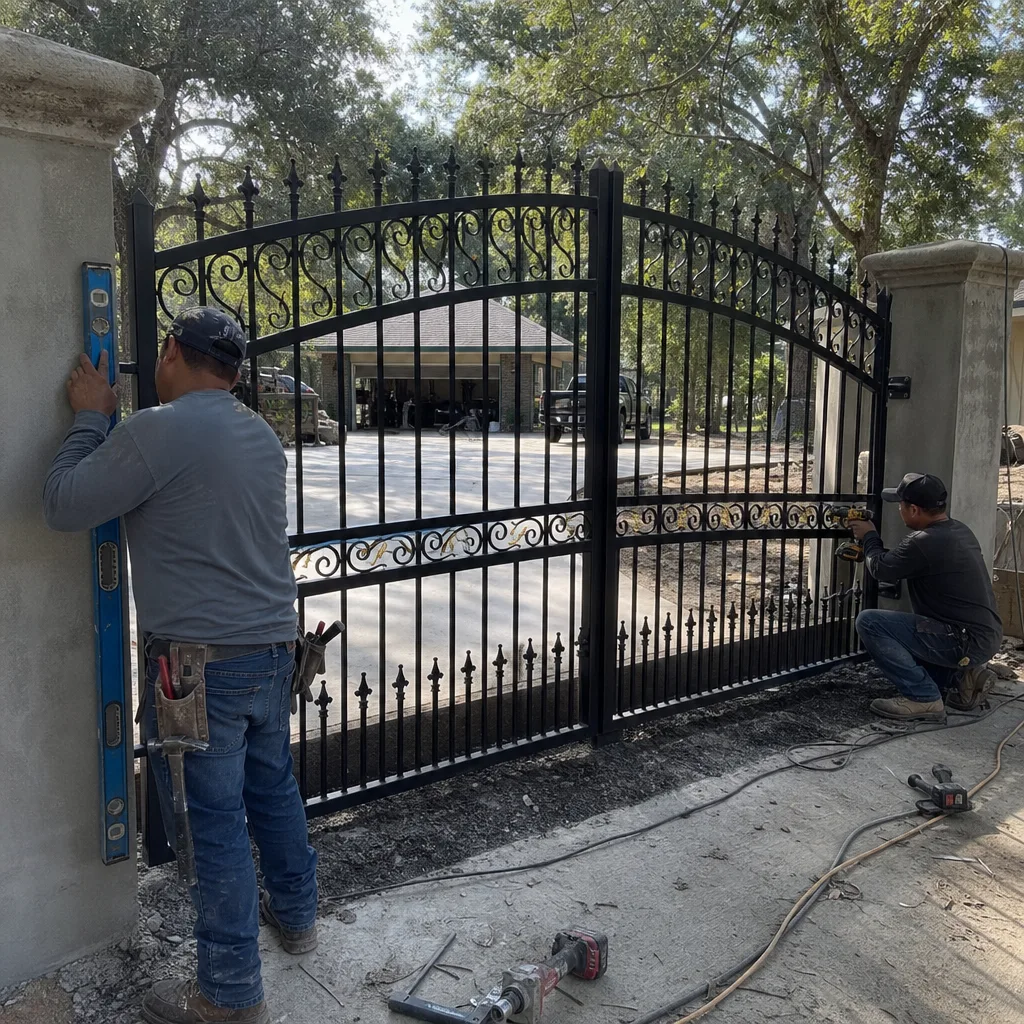
If your gate repair does require a permit in Conroe, the cost is modest compared to the gate work itself. The city’s residential fence and gate permit fees are calculated on a per-project basis and typically run in the low three figures. An inspection, when required, is scheduled through the Building Department after the work is complete, and the inspector verifies height, footprint, and pool barrier compliance.
In unincorporated Montgomery County, you won’t pay a permit fee for residential gate work because there’s no county-level gate permit to issue. Your cost exposure there is different: an HOA fine if the deed restrictions were violated, and the cost to bring the gate into compliance after the fact. HOA fines for unapproved gate work in Montgomery County subdivisions commonly start in the hundreds and accrue monthly until remedied.
For the gate repair itself, Conroe market pricing falls in predictable ranges. A hinge replacement on a single swing gate typically runs $150 to $400 depending on the hardware weight. A motor replacement runs $600 to $1,500 depending on the brand and whether the arm bracket is intact. A full gate operator swap with board, limit switches, and safety edges can reach $2,000 to $3,500 on a larger slide gate. Any contractor should quote you a flat price in writing before work starts, and if they won’t, that’s a signal to keep looking.
Common Mistakes to Avoid
- Assuming a repair is always exempt. A hinge replacement on a 4-foot gate is exempt. Replacing that 4-foot gate with a 6-foot model isn’t, and in Conroe, the city can require the taller gate to come down.
- Assuming the county permits what the city doesn’t. Montgomery County doesn’t permit residential gates. If your address is outside Conroe city limits, the rules come from deed restrictions and state property law, not a county permit office.
- Ignoring pool barrier compliance on a “minor” repair. Swapping a pool gate latch for a standard gate latch breaks self-latching compliance. The repair itself won’t get flagged, but the home inspection when you sell will.
- Trusting a verbal estimate. A contractor who won’t put a price in writing before the gate is opened is a contractor who can inflate the final invoice. The Conroe market is full of honest shops; there’s no reason to accept verbal-only pricing.
- Not checking the HOA before changing gate height or material. The city may allow 8 feet. Your HOA may cap at 6. The HOA wins, and the fix is a new gate.
- Replacing an operator before understanding why the old one failed. A motor that burned out because the gate was binding on a misaligned hinge will burn out the next motor too. The $400 hinge repair prevents the $1,200 motor replacement.
- Skipping the photo record. When the next technician arrives five years later, the photos of what you did in 2026 are the difference between a 30-minute repair and a two-hour diagnosis. At $150 an hour for service labor, documentation pays for itself.
When to Call a Professional
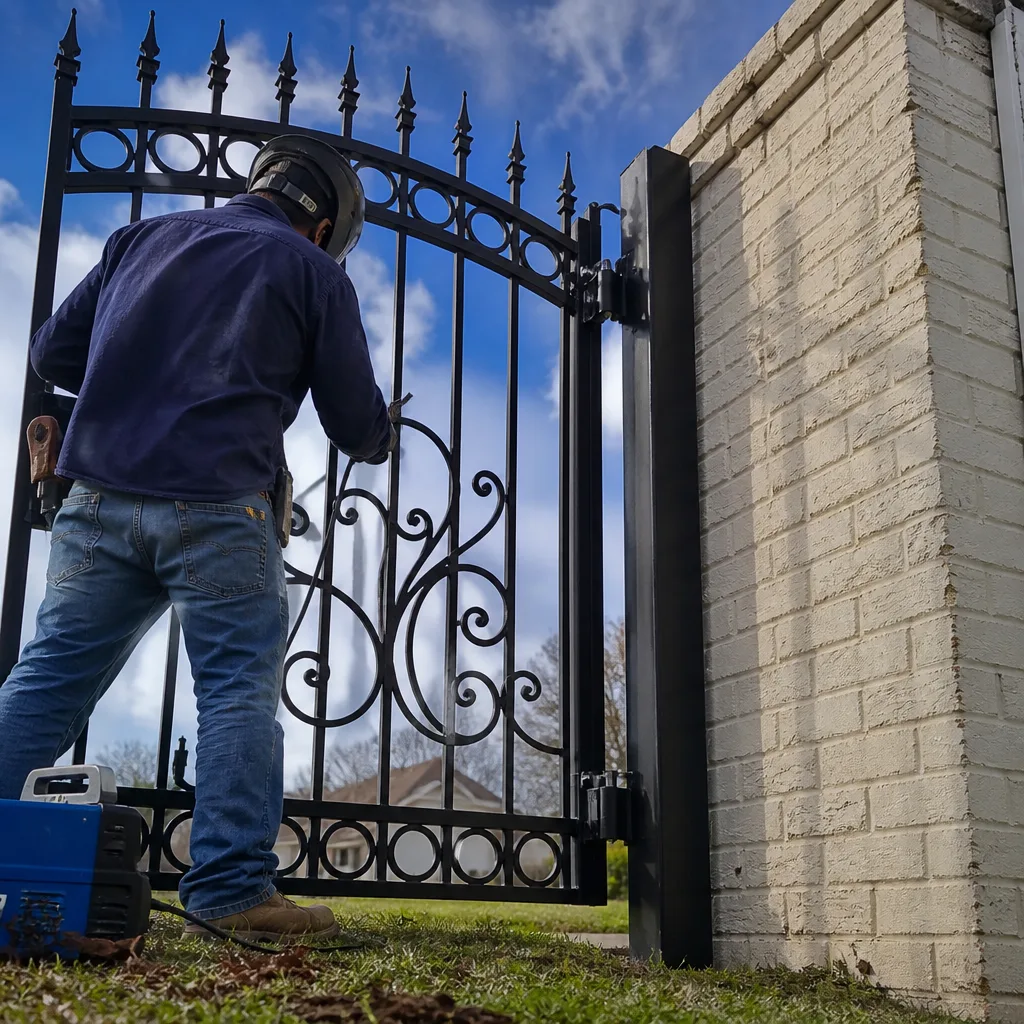
Call a professional when the gate is off its hinges, when the motor is grinding, or when the answer to any of the permit questions above is “I don’t know.” A good gate technician in Conroe will measure the height, identify the jurisdiction, check the pool barrier requirements, and tell you whether a permit is needed before any tool comes out of the truck. That’s the standard we operate under at Vance Gate Repair Conroe home, and it’s the standard you should expect from anyone you hire. Gate Repair in Conroe starts with the same conversation we’ve had with thousands of homeowners since 2014: what’s wrong, what’s the written price, and what documentation you’ll have when we leave. Call (936) 297-5126 for a free estimate.
Frequently Asked Questions
Most Gate Repair work in Texas does not require a permit because it restores the gate to its original condition. The exceptions are repairs that change the gate’s height, footprint, or pool barrier compliance, all of which are treated as alterations and may require a permit in cities like Conroe. Call (936) 297-5126 if you’re unsure about your specific repair and we’ll walk through the determination with you.
Most Conroe gate repairs run from $150 for a basic hinge fix to $3,500 for a full slide gate operator replacement, with motor swaps landing between $600 and $1,500 depending on brand. You should always get a flat written price before work starts, which is exactly what we provide under Haven Standard Clause 1. Call (936) 297-5126 for a free written estimate.
Montgomery County does not operate a residential gate permit office for unincorporated areas, so gate compliance there is governed by deed restrictions and state property law. If your address is inside Conroe city limits, the City of Conroe Building Department is the authority. The two jurisdictions are not the same, and the first step is confirming which one you’re in.
A pool gate repair that changes the latch style, hinge type, or gate height can require a re-inspection in Conroe because the gate must remain compliant with IRC Section AG105. Repairs that preserve the existing self-closing and self-latching hardware are generally exempt. When in doubt, document the latch height and hinge type before and after any pool gate work.
Yes. HOA deed restrictions are private contracts that run with the land, and Texas courts enforce them as long as they don’t violate state or federal law. If your HOA caps gates at 6 feet and the city allows 8, the HOA cap controls, and the remedy is an architectural review petition, not a city variance.
Ask for a written scope that identifies the job as a repair or an alteration, a written price before work begins, a photo record after the job is done, and a statement that code compliance was considered. A contractor who can produce all four is doing documentation at the level we’ve done at Gate Installation in Conroe and repair since 2014. Call (936) 297-5126 for a free estimate.
The Bottom Line
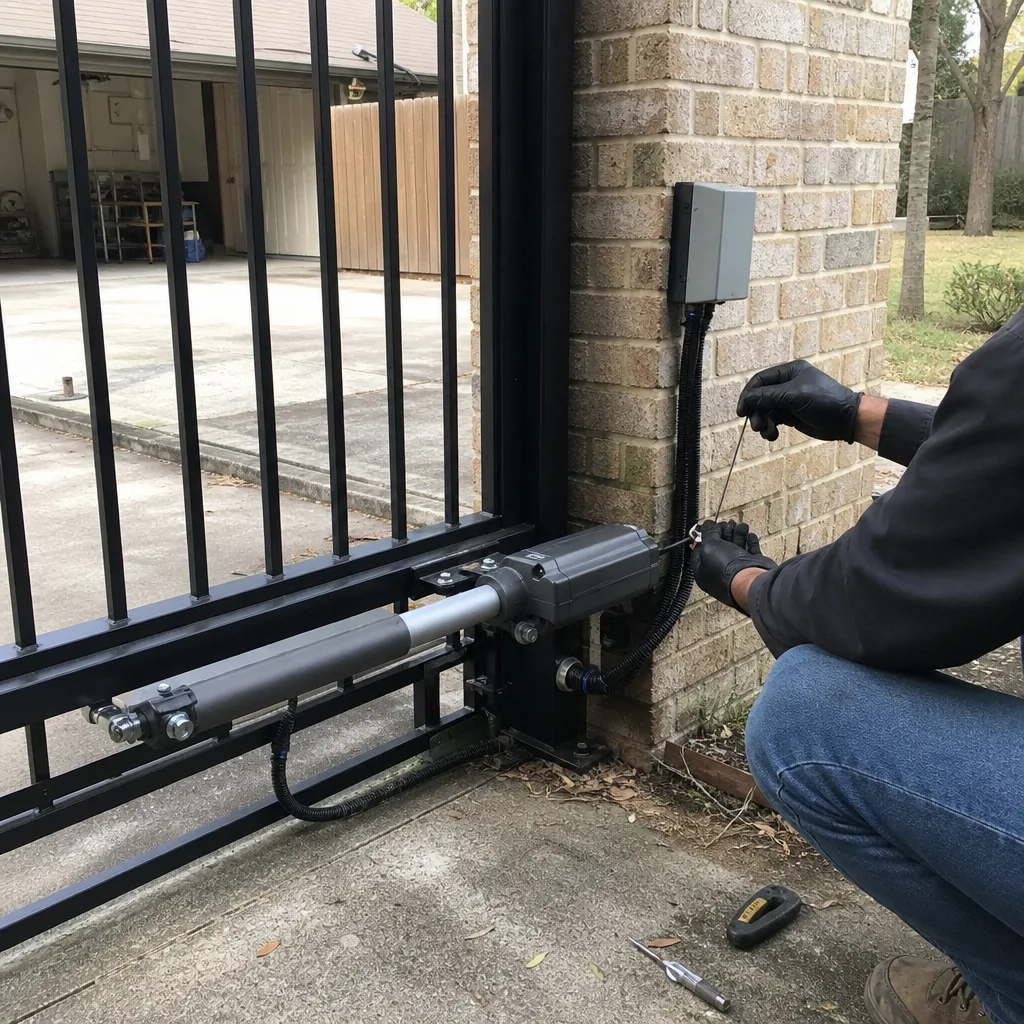
The gate permit question in Texas comes down to three tests: did the repair change the height, did it change the footprint, and is the gate part of a pool barrier. If the answer to all three is no, you’re almost certainly exempt, and no permit office in Montgomery County will care. If the answer to any one is yes, the next stop is the City of Conroe Building Department or your HOA’s compliance committee, and the cheapest time to ask is before the work starts. Documentation is the difference between a gate that sells a house cleanly and one that threatens the sale. For Gate Motor & Opener in Conroe, gate repair, and the written documentation that proves the job was done right, call Vance Gate Repair Conroe at (936) 297-5126. A live person answers, any hour, and the price is in writing before anyone touches your gate.
Written by Adrian Vance, Owner at Vance Gate Repair Conroe, serving Conroe since 2014.